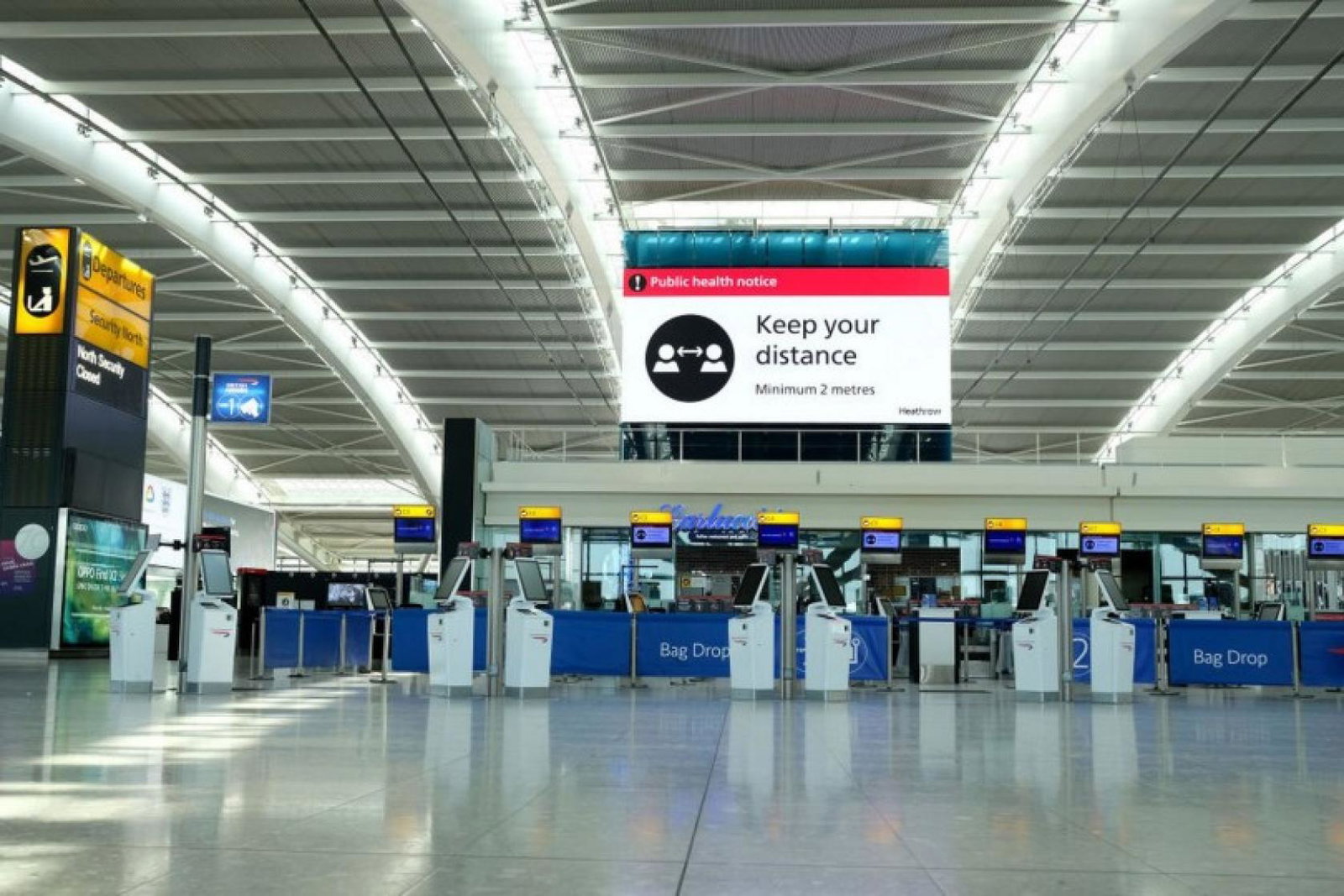
Just 1.7 million people travelled through Heathrow in Q1, down 91% on Q1 2019; boss John Holland-Kaye said border closures had "devastated" the UK’s aviation sector, and trade.
However, he said restarting international travel from 17 May would be a major step towards kickstarting an economic recovery.
"These results show how Covid has devastated the aviation sector and British trade," said Holland-Kaye, Heathrow chief executive.
"Restarting international travel from 17 May will help to kickstart the economic recovery, allowing exporters to get their goods to market, as well as reuniting families who have been separated for over a year.

"Heathrow is gearing up for the recovery. By acting early to cut costs and protect cash, we have put ourselves in a strong financial position to weather the storm and are ready to welcome back passengers, while keeping them safe."
Heathrow said while underlying demand for travel remained strong, uncertainty over government policy on travel had resulted in the airport cutting its annual passenger forecast for 2021 to between 13 to 36 million, down from 81 million in 2019.
The airport said restarting travel to markets such as the US would be "critical" to the recovery, stressing the airport was ready to scale-up operations as demand returns.
However, it warned: "Border Force’s ability to provide an acceptable service for arriving passengers remains a primary concern surrounding the restart and ministers will need to ensure every desk is staffed to avoid unacceptable queues."
It comes after reports of six hours queues at the border at Heathrow; the airport’s chief solutions officer Chris Garton recently told MPs queues caused by Covid border checks were becoming "untenable".
Heathrow said it was in a "resilient" financial position despite Covid challenges. Protective measures include halving cash burn compared to Q1 2020, achieved by cutting operational expenditure by a third and capital expenditure by more than three-quarters.
It has also increased liquidity by 41% to £4.5billion since the start of the pandemic, enough to meet financial commitments for at least another 15 months even with reduced passenger numbers.