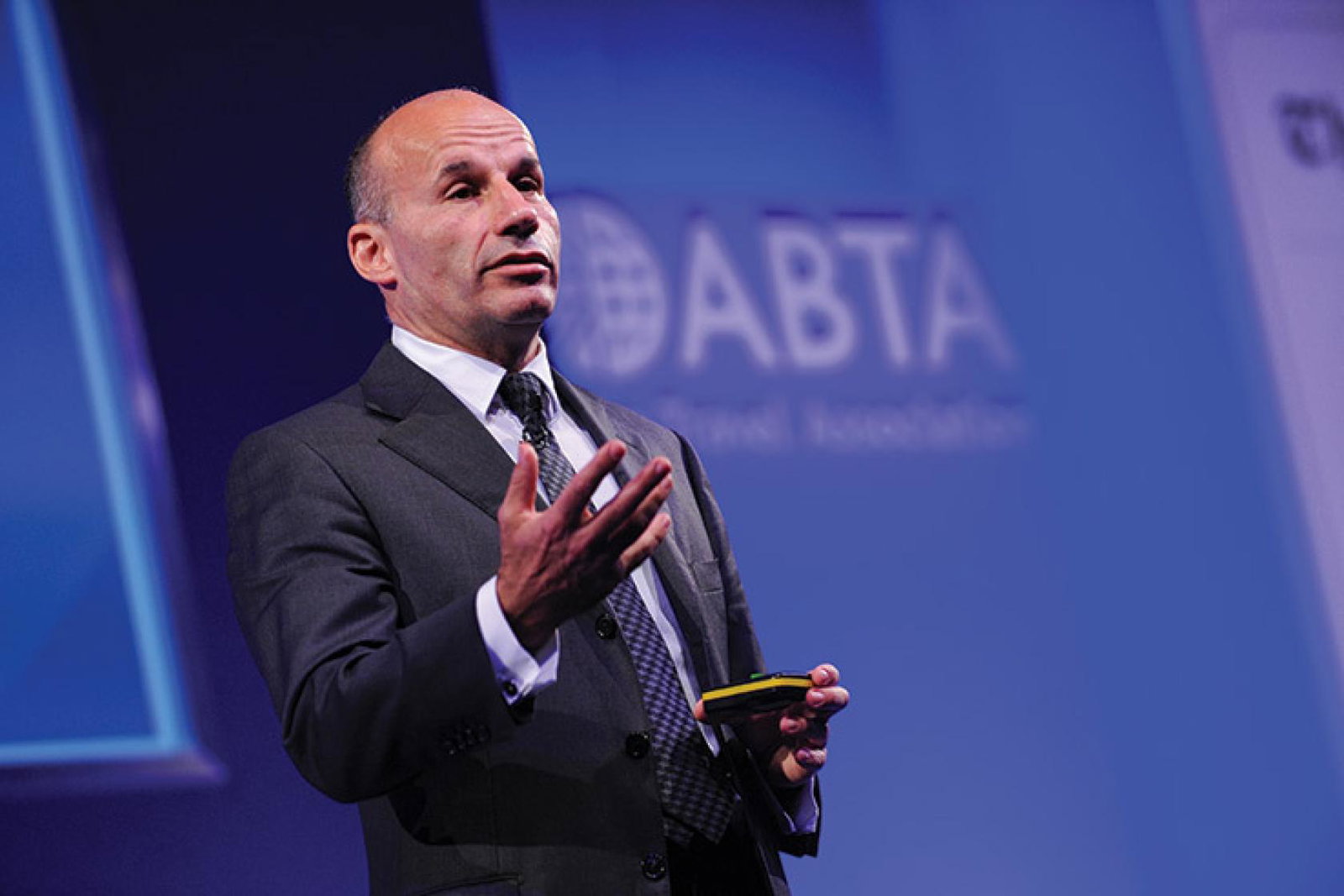
We are sitting at Abta HQ on a dull, grey day in London, with rain lashing at the window. It’s miserable outside, but perfect weather for encouraging dreams of sunnier climes, and persuading consumers to start thinking about booking their holidays.
And after the challenges of last year, the industry will be hoping for a positive peaks period. Abta often comes in for criticism by members of the trade, whether for its close ties with tour operators or its dual role as both a trade and consumer organisation. But it was the challenges of 2015 which Mark Tanzer says reemphasised the importance of the association.
“We are still needed as much as ever,” he stresses. “Look at the events around the world last year. We have the ability to coordinate a response quickly and reassure the public. The ‘Travel with Confidence’ strapline that we developed was exactly what was needed to reassure customers going forward.”
"We wanted to make Abta more international... we were trying to simply get ready for a future where companies become more cross-border”
Mark Tanzer
In spite of the challenge of terrorism threats, Tanzer believes the sector is starting from a more positive position than this time last year. “The indication is that people will travel more than they did last year. The economic climate is benign; we have high employment and a strong pound as well as low oil prices.
“If you put aside the disruptions [to travel caused by terrorism], we’re at a better starting point incrementally than this time last year.”
The problem of course is that the disruptions caused by terrorism cannot be put aside, and most in travel – and the world at large – are braced for another challenging year. “This problem isn’t going to go away any time soon,” Tanzer concedes.
He believes destinations such as Sharm el Sheikh and Tunisia are likely to struggle to convince tourists to return in 2016, which will in turn present other concerns. “I do think North African destinations will continue to have a difficult year, which will put pressure on other destinations – on prices and capacity – and the knock-on effect will be a challenge.
“We will need to make sure that the capacity is there, and if there is a lot of flight capacity, this will help keep downward pressure on consumer prices, but then this will put pressure on the industry because it will create lower margins.”
Directive approach
Terrorism is just one of the issues facing the sector this year. There is of course the ongoing debates within government regarding the implementation of the Package Travel Directive, which will need to be completed this year if it is to be introduced within its end of 2017 deadline. Elsewhere, Air Passenger Duty remains “the millstone around the industry’s neck,” says Tanzer, the issue of a possible “Brexit” could have far-reaching consequences for the sector, as would a possible end to the Schengen agreement. And then there is the wearisome argument on airport capacity.
On the latter, Tanzer admits he is “optimistic, rather than confident” that the government will finally reach a decision in the summer, as it has promised. Abta has campaigned for expansion at both Gatwick and Heathrow – “the time it will take to build an extra runway at one, will take so long that we’ll be needing another one by the time it’s finished, so we really want expansion at both,” Tanzer says.
“The indication is that people will travel more than they did last year. The economic climate is benign; we have high employment and a strong pound as well as low oil prices.” Mark Tanzer
The association is also still deep in talks with the government on PTD. “It’s a question of how we arrange the mechanics for delivering it.” A response from the government about how it intends to implement the directive had been due at the end of last year, but in true Westminster-style, failed to materialise.
Tanzer says the Department for Transport and Department for Business, Innovation and Skills are “intending to consult on it soon”, and that he is hopeful there will be news on it this quarter, anticipating a full response will be made by autumn.
“It has to be implemented by the end of next year; if there are major changes, then we will need to be given some notice so we know what the scheme will be going forward,” he says.
Europe’s future
Tanzer is also concerned about the potential exit of Britain from the EU, and potential implications for the sector. David Cameron has committed to holding a referendum on the issue by the end of 2017, but political analysts have suggested there could be a vote by the autumn.
Tanzer says Abta will form its own analysis about the implications for travel should the UK favour a vote to leave the EU, and will work with members to decide its formal position. “We will be talking to members about what it would mean – for example if a business employs people from the EU, they may have to then apply for different work permits or visas, which could cost companies and make things more problematic.
“We will see if members are in favour [of a Brexit] though, and we will do our own analysis. If we believe it will be damaging for the sector then we will definitely have a view, but if it looks like nothing will change whether Britain is a member or not, then Abta will remain neutral on the issue.”
There might be numerous external challenges facing the industry, but Abta itself has also experienced change within its own structure. In December, it successfully revamped its chairperson elections, with these roles now being selected – and appointed – from within the board, rather than having external candidates.
“It was the logical thing to do,” insists Tanzer. “It’s the way that [chairperson elections] used to be run several years ago, and the position has become increasingly technical and demanding. It makes sense to have someone that has been part of the discussions that have been going on, and is familiar with all the issues that the board faces.”
Global ambitions
There was also another vote which the board attempted to push through though, which failed – albeit by a very close margin. “We wanted to try and make Abta more international,” Tanzer explains. “We already have members based overseas who trade in the UK, and we have big members [such as Tui] that are Anglo-German businesses anyway. We were trying to simply get ready for a future where companies become more cross-border,” he says.
The vote was lost narrowly – 73% of members voted in favour, but a motion must receive 75% of the vote to pass. Tanzer believes the association failed to explain to members its reasons for wanting the change.
“The time it will take to build an extra runway at one airport will take so long that we’ll be needing another one by the time it’s finished”
Mark Tanzer
“It wasn’t about throwing open the doors to any global company being an Abta member,” he stresses. “We always scrutinise companies very carefully – the intention was never to say anyone can belong to Abta, but we didn’t explain this properly.”
The motion has been shelved for the time being – “this is a democracy; it wouldn’t make sense to have another vote this year” – but Tanzer says the issue could be revisited in the future. “We’ll wait until we’ve got a good reason to bring it up again”.
For now, the association will be focused on a number of campaigns – it launched its “early-bird campaign” last Friday, in a bid to encourage consumers to book early, and it will be ramping up its focus on fraudulent travel companies in the spring.
Abta might sometimes face criticism but few could deny the association’s – and Tanzer’s – commitment to providing support to both industry and consumers.