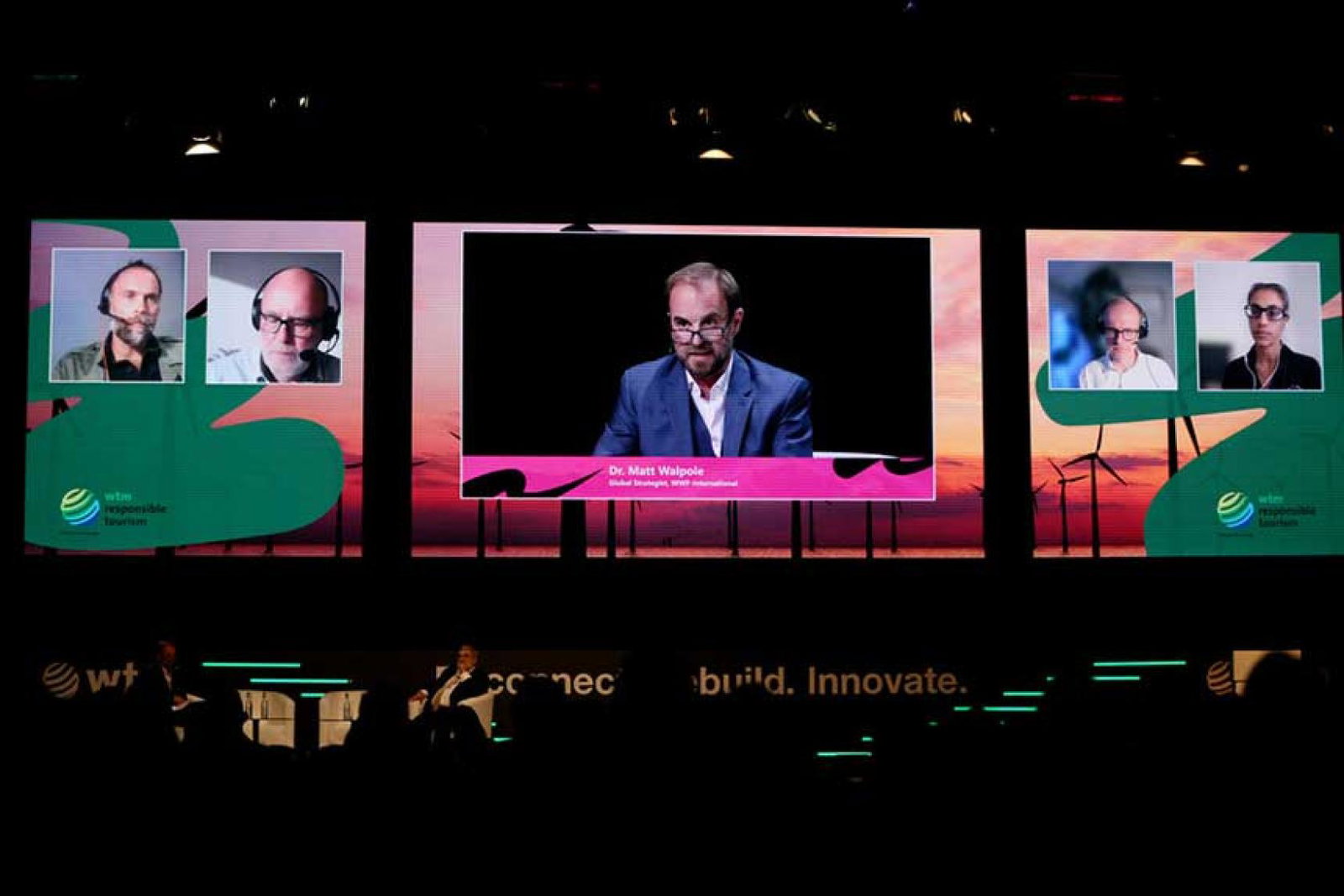
Justin Francis, chief executive of Responsible Travel, who joined the panel discussion via live video link from Glasgow where he was attending the Cop26 conference, said that nature was “featuring prominently” at the summit, due to world leaders recognising its ability to sequester carbon and slow global warming. He predicted that “nature will become a much bigger focus for governments” in the coming years, with “plans to address declines in nature by 2030”. He urged travel and tourism companies to prepare for the inevitable changes in regulation to ensure they are helping protect nature and conservation. “We will see more and more regulation… and push-down from government, so if you are a travel company, you had better get with the programme now because you will be forced to otherwise.”
Jarrod Kyte, product and sales director at Steppes Travel, said the tour operator was already seeing “shifts in terms of demand” from clients for more responsible, nature-filled holidays, with Scotland now one of its top three best-selling destinations. He added that rewilding holidays in areas such as the Scottish Highlands present “the tourism industry and biodiversity with a real fighting chance, that can be scaled up across the UK” and other countries.
He believes a successful rollout of rewilding and conservation experiences should involve “collaboration between many different stakeholders, including tourism, farming and agriculture. He added that “businesses are waking up to the opportunities that exist and applying a financial value to biodiversity and protecting it.”
Farah Mukhida, executive director of the Anguilla National Trust, agreed that travellers are starting to show an increased interest in “seeing a different side of the island” and participating in rewilding and nature-boosting experiences such as tree planting or volunteering on Anguilla’s offshore islands. Their experiences were also sparking the desire in others. “Sharing their stories with other guests or on social media can be powerful in nature and advocacy work,” she said, adding that more still needed to be done for nature to be “intrinsic in how tourism operates” in destinations.
Kyte said it was important for the travel and tourism industry to “stop looking at volume” and instead look at “value and yield” to protect nature, and implied that customers should be prepared to pay substantial costs to enjoy nature and conservation experiences. “We need to attach a value to nature and pay for the privilege, and do what we can to control footfall.”
Michael Lutzeyer, owner of Grootbos Private Nature Reserve in South Africa agreed, and gave the example of a conservation levy that his guests now contribute to. “We send out newsletters so they can see where their money goes, and it makes them feel good that they are helping conservation,” he said.