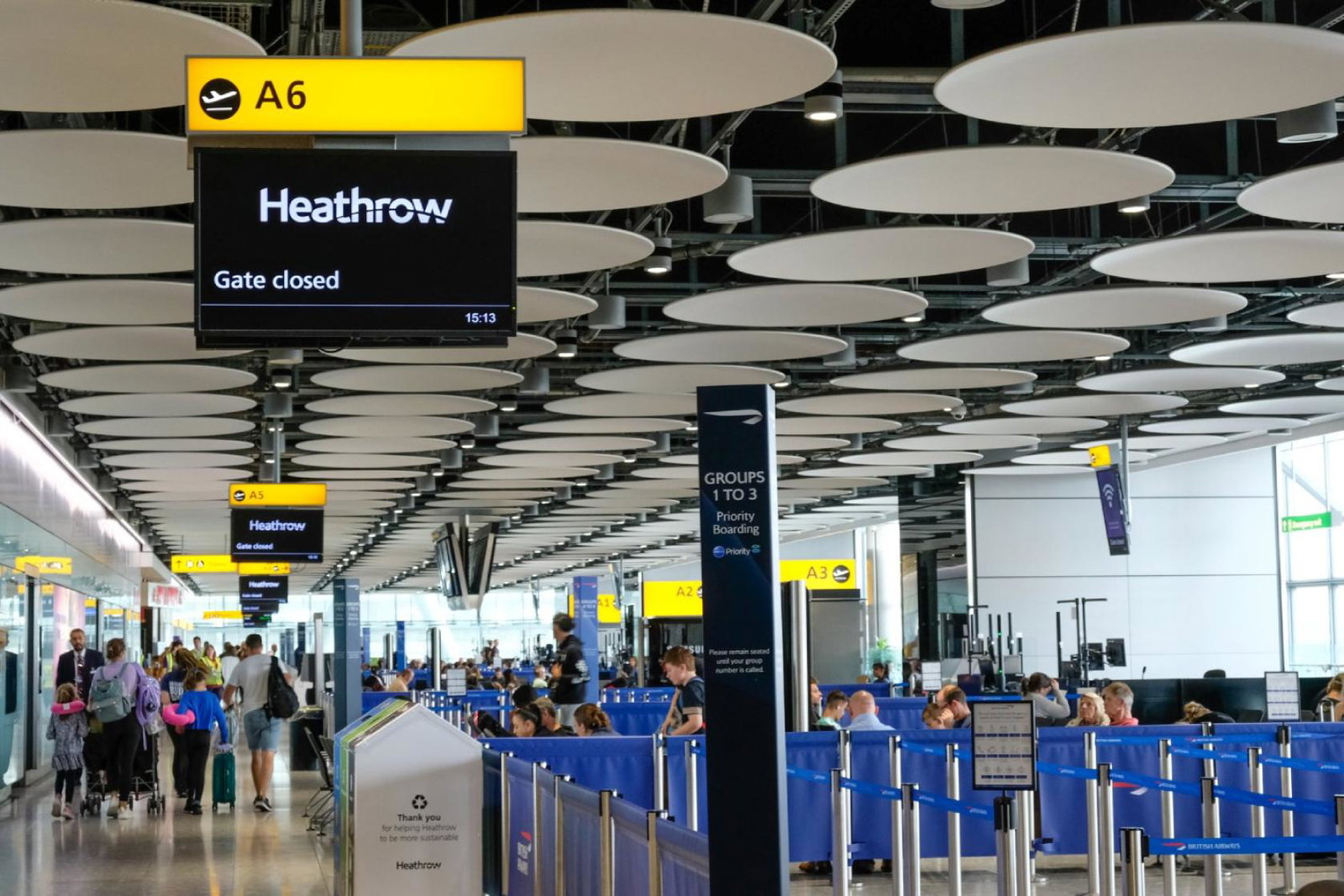
Heathrow and several other major European airports are recovering from a weekend cyber attack that left a spate of flight cancellations and technical challenges.
Airlines that use US-based Collins Aerospace's systems were forced to manually check in passengers with the recovery still in operation on Monday morning.
Heathrow, where more than 20 flights were cancelled, said the “vast majority” of flights continued to operate and said the situation was not something it had direct control over.
“We are supporting airlines to make sure passengers check in; some airlines are working on manual contingencies,” a spokesperson said.

Heathrow said check-in and boarding for some flights “may take slightly longer than usual”, adding: “This system is not owned or operated by Heathrow, so while we cannot resolve the IT issue directly, we are supporting airlines and have additional colleagues in the terminals to assist passengers.
"We encourage passengers to check the status of their flight before travelling to Heathrow and to arrive no earlier than three hours for long-haul flights and two hours for short-haul.”
Brussels airport was particularly affected by the attack. On Monday, 40 of its 277 departing flights and 23 arriving services were cancelled.
“The service provider is actively working on the issue and trying to resolve the problem as quickly as possible. At the moment it is still unclear when the issue will be resolved,” it said.
It advised passengers flying to the UK to arrive three hours before departure.
On Saturday (20 September), Heathrow cancelled 14 flights and Brussels 15, according to Cirium Data. Berlin cancelled seven and Frankfurt, Munich and Paris Charles de Gaulle a handful each.
The situation worsened on Sunday (21 September), with Brussels cancelling 32 flights by 11.30am, Frankfurt 17 and Heathrow seven.