What's the Advantage story in 2025?
There were perhaps two headline takeaways from this year's Advantage conference: a new look, and a statement underlining what appears to be rude financial health.
The rebrand – a new logo and colour scheme, a dramatic consolidation of more than 30 existing bits of branding, and a new digital news and resources hub – also came bundled with a new vision, mission and set of brand values.
Advantage also has a new trade and consumer-facing website, which promises a far more nuanced search function to help prospective clients find the right Advantage member agent for them.
The consortium is targeting a three-fold increase in searches during year one, with more search functionality – including by specialisation – coming further down the line.
Chief executive Julia Lo Bue-Said and marketing director David Forder wouldn't be drawn on the cost to members of the rebrand, stating the consortium first needed to audit members' usage of its existing branding. Lo Bue-Said described the investment in the rebrand as "sizeable".
Advantage also added £550 million in additional turnover during its 2023/24 financial year, up from a £100 million increase the previous year. This owed, in part, to the addition of more than 50 new branches, growing Advantage's network of member locations to around 750.
Global turnover is now £17 billion-plus, of which £8.8 billion is taken in the UK, split 70:30 business to leisure (£2.5 billion). Lo Bue-Said said Advantage should "easily" exceed £20 billion turnover globally in the next 18 months to two years. Full results for its 2024/25 financial year will follow in the coming weeks.
Market still late, and value still key
Unsurprisingly, the market, consumer trends and the trading environment were key talking points. Delegates heard sales volumes and pricing are currently holding up in an increasingly late booking environment and in spite of consumers’ relentless pursuit of "value", with pricing generally inching up.
In the three weeks preceding the conference, nearly 40% of Advantage members' bookings were for departures within 12 weeks, with the current departure month accounting for the highest volume of bookings. "It's higher than I've ever seen it," said Advantage's chief commercial officer Kelly Cookes.
Cookes added the key consideration for clients was value. "Everyone wants value, that's nothing new," she said. "But I've never seen it be a driver like it been in recent months."
Commercial director John Sullivan, though, told TTG this wasn't coming at the expense of revenue, and said it was important not to conflate "value" with "cheap". He said members' revenue during peaks was up 13% year-on-year, and up 10% year-on-year during the first half of May.
Advantage research, meanwhile, showed people were cutting back more than ever in other areas of their lives, and even working extra jobs and "side hustles" to maintain their level of travel spend. Lo Bue-Said added value was "increasingly being defined by experience and quality rather than merely by price".
It's time to get (even more) social
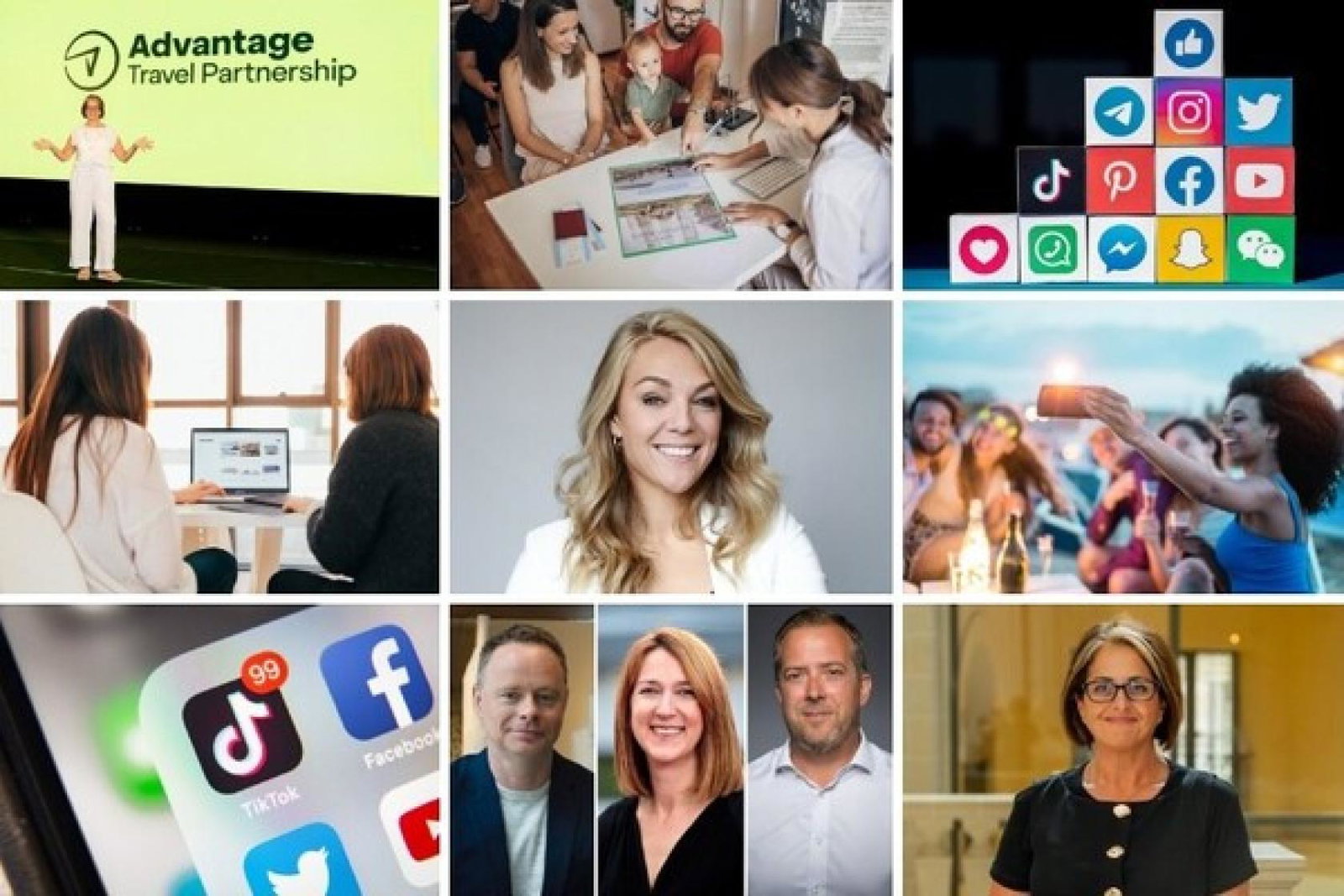
Social media was a frequent talking point in terms of both its importance to agents as a marketing and brand awareness tool, and a sales platform.
Advantage's chief commercial officer Kelly Cookes told delegates 84% of the UK population were now active social media users. "And when you think around 14% of the population are under 12, that shows you how powerful social media is," she said.
By way of context, Cookes shared data suggesting the average social media user in the UK spends 90 minutes a day on social – and scrolls through 300 metres of content.
Senior commercial manager Kerri Thorpe added that almost a quarter of respondents to a recent survey said they used TikTok for inspiration, "with a similar amount booking as a result of the content seen".
Lisa Minot, The Sun newspaper's travel editor, said social media had brought a "sea change" in the way younger people seek holiday inspiration and the experiences they look for when in destination.
"Social media is becoming ever more really relevant and important, and something that every agent should really be embracing," she said.
She encouraged delegates to lean on their expertise. "We are experts in our field. We know what we're talking about. We have knowledge. And that makes us just as much of an influencer as your Kardashians or anyone else."
Cookes added: "It's not OK just to be active on social media. Have a content plan. And use that content to inspire and education, as well as to sell."
Recap: the 2025 Advantage Travel Partnership conference
Agents can't afford to ignore TikTok
Both Thorpe and Minot highlighted TikTok as an increasingly common tool used by consumers to research their trips.
Heath Heise from travel-focused marketing collective Llama delivered a TikTok masterclass, telling delegates more than 80% of the network's 25 million UK users aged 18 and above had considered a new destination due to TikTok content, while 69% had used it to discover new travel brands.
He characterised TikTok as "travel's emotional video brochure", bringing destinations and experiences to life, and revealed Gen Z users, in particular, were using TikTok as a search engine – especially for travel.
Heise said TikTok was particularly powerful for driving brand awareness, and encouraged agents to experiment with the platform's native tools and to ride trends such as by using musical backing from audio trending in the travel space.
He also highlighted the significantly lower cost of utilising TikTok, it being free to use and cheaper than Facebook and Instagram in cost-per-click terms when putting budget behind a video.
In addition, he said TikTok valued efforts to please the algorithm as much as it does efforts to be unique, and said a big following was no guarantee of a viral hit.
"Think about how you represent yourself as a brand, and what travellers want," said Heise. "Get into users' mindset. Be you, be real, don't be polished. Authenticity on TikTok wins. This where your personality comes to life."
Values are everything to businesses in 2025
Advantage's rebrand introduced a new vision, mission and set of brand values. "We’ve always had a vision, we’ve always had values," said Lo Bue-Said. "But as we started this project, it was clear we hadn’t evolved them. The organisation and our strategic direction has moved at a faster pace than our values and brand."
She explained the deeper the consortium got into the rebranding exercise, the more facets came into the equation. "It gave us the opportunity to think about what and where we want to be. And this was an opportunity to really bring that to life."
Values were the focus of panel featuring easyJet holidays' Paul Bixby, Princess Cruises' Eithne Williamson and Kuoni's Mark Duguid.
Bixby said Advantage's "be bold" value mirrored one of the operator's own. "We try to nurture a culture of innovation," he said. "Fail fast is what we call it as well. Don’t be afraid of not being right the first time."
He said values had to come from the top. "If the hierarchy don’t believe in it, then the people underneath will be scared to 'fail fast' because they’ll be afraid of doing something wrong. It has to go all the way through an organisation."
Williamson picked out "people first" and revealed how Princess had taken steps to create a supportive and inclusive working environment, which included convening an employee engagement group, and acting on feedback to make colleagues feel more comfortable sharing their thoughts.
Duguid, meanwhile, earned a round of applause when he told of how he no longer accepts poor service in his personal life, and advocated for agents to do the same at work. "If you’ve been on hold for an hour, just hang up – call someone else," he said. "In a B2B environment, you should not stand poor service."
Travel's future is consultative, not transactional
Personalisation, and the journey from agents being transactional to agents being consultative, was another theme of the conference, particularly after the pandemic drove what conference moderator Sophie Morgan described as "a re-imagination" of the role of their agent, and their standing.
"That transactional element of a relationship [between agent and client] will be taken over by technology," predicted Mark Cuschieri, president of the Global Business Travel Association, who added this would free agents up to "really focus on... value and experience".
Cookes said personalisation was vital to this. "Everything you do now needs to be about personalisation," she said. "Show your customers you understand them. It's about understanding customers, and understanding product, and being able to put them together in a way only an agent can – that's where that value is shown."
More from the 2025 Advantage Travel Partnership conference
People's expectations are changing at pace
Minot, Cuschieri and Cookes all agreed that travellers' expectations were changing. Minot started by exploring the demands of younger, particularly Gen Z, travellers.
"They are used to travel unlike my generation when perhaps you went away on your first holiday as an adult," she said. "That Gen Z market, they're sophisticated, they've been on holiday with their parents from age zero, they have a very different perspective on the world."
Minot said experience-led, purposeful, climate-conscious travel was important to this demographic, and highlighted the rebound in rail travel, which she said harked back to her generation's right of passage – interrailing.
She added Gen Z customers won't be travelling "without good reason" or something to get out of it, and were looking for more than fly and flop.
Cuschieri said the pandemic had brought sustainability to the fore, and that purposeful travel was now the norm. "Those days trips, they're more or less gone," he said. "People are travelling less frequently, but for longer durations to maximise their trips."
He said in the business sector, clients were "finding more stability in their work-life balance" as a result.
Cookes said there was a difference when it came to leisure travel, and that while there was data to show leisure consumers are willing to pay more to travel responsibly, "the reality is we don't see that yet".
"There's almost an expectation from a leisure customer that that responsibility sits with the supplier," she said. "I think they [customers] see their role as contributing when they get to the destination – eating out locally, buying souvenirs, etc.
"There are some differences by sector. In the adventure touring space, we see a more purposeful traveller. Among certain generations, we see this too. But I think across the board, the data tells us we're not quite where we perhaps think we are yet.
‘Getting comfortable with the uncomfortable’
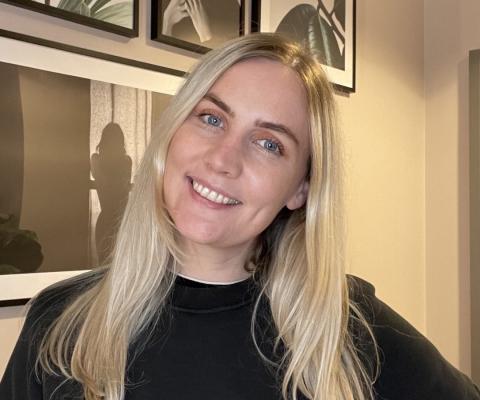
The conference drew to a close with sessions from communications practitioner Sarah Blumenau, which narrowed in on neurodivergence and particularly ADHD, and a fireside chat with conference moderator Sophie Morgan (pictured) hosted by Sullivan.
Blumenau said agents shouldn't be afraid to ask what they might feel are uncomfortable questions. "Nobody is ever offended by asking," she said. "The number one thing I find when I speak to people is that they don't ask because they're frightened of getting it wrong, saying the wrong thing. If you genuinely want to know, you can never, ever, ever offend."
Morgan said agents needed to be confident navigating sensitive issues and to ask customers with additional needs not about what happened to them, but what they need.
"It is as simple as just saying, which you do all the time every day, I'm sure, 'what do you need?'," she said. How can we make your stay more comfortable? What do you need to be able to feel more confident? These are just open questions. They do not require hours of training and understanding and expertise."
Asked whether she's rather someone got a question wrong rather than not ask at all, she replied unequivocally: "100%."
During an earlier discussion, Cookes said: "It's all about education. We have to get comfortable asking the right questions. There's still a nervousness – we're not sure whether it's the right thing to do. But in many cases, they're the same questions [you ask other clients]: 'What can I do to make your holiday perfect for you?'"
She added agents mustn't lose sight of the commercial imperative. "It's a sensitive thing to say, but it's really important we think about the commercial opportunity and how we make the most of that."
Minot said the fact big companies like Jet2holidays with their initiatives targeting the deaf community and Tui with its 200 accessible hotels was indicative of how they are sensing opportunity. "They are businesses at the end of the day, they're trying to make money. But if it's doing good at the same time, that's no bad thing."
Morgan agreed. "It's something people get tongue-tied about," she said. "It's OK. Do it for financial benefit. They can go hand-in-hand."
Morgan also urged agents to bear in mind the spending power of disabled customers multiplies "almost exponentially". "We don't just travel solo. We come with our families, our friends, our TAs. There's a multiplier there for the value of that demographic."
‘A formidable force for good’
Emotions ran high on the second day of the conference when chief operating officer Paul Nunn called proceedings for a halt for a special announcement… cue a photo montage celebrating Lo Bue-Said's 30 years with the Advantage Travel Partnership.
What followed were a series of video tributes from industry colleagues and peers, friends and family, as well as on-stage tributes from Nunn, James Beagrie, boss of Advantage member Meon Travel, and Suzanne Horner, chief executive of Gray Dawes Group.
And in a final twist, tears already flowing, Lo Bue-Said was joined – unexpectedly – on stage by her husband and one of her sons. Taking the mic, she paid tribute to her many colleagues past and present. "It’s been nearly half my life," she said. “I don’t do this alone, I have such a dedicated, committed team. None of this happens on its own.”
Nunn paid tribute to Lo Bue-Said’s “steadfastness, determination, passion and drive”, while Beagrie described her as “a formidable force for good”. Horner, meanwhile, highlighted Lo Bue-Said's advocacy for the industry during Covid. "Every time I walked past a TV, there was Julia, she was everywhere."