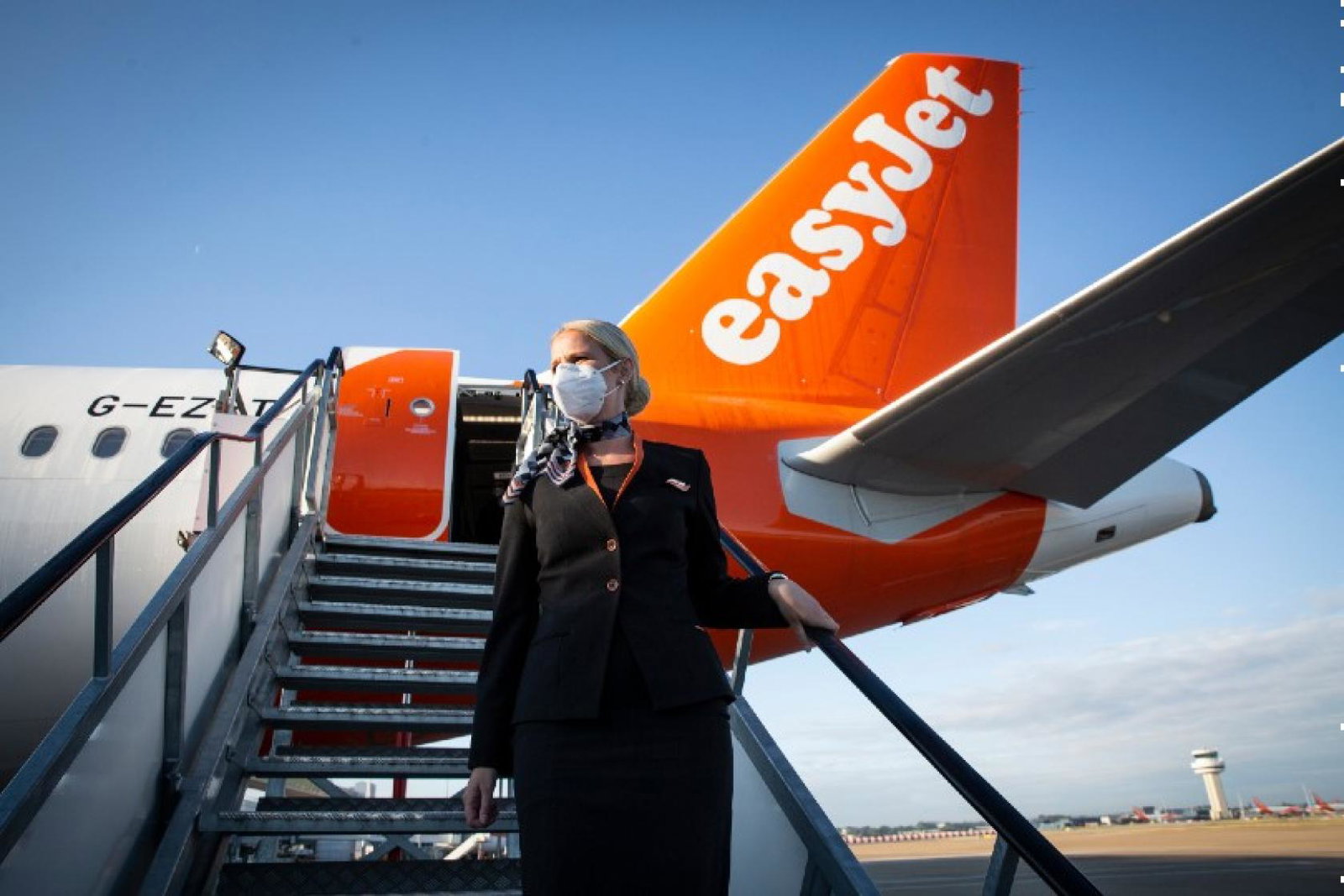
The Luton-based airline said it was planning for capacity over the key summer months to return to “near 2019” levels as the company revealed financial results for the first quarter of its financial year up to 31 December 2021.
EasyJet’s chief executive Johan Lundgren said: “Booking volumes jumped in the UK following the welcome reduction of travel restrictions announced on 5 January, which have been sustained and then given a further boost from the UK government’s decision earlier this week to remove all testing requirements.
“We see a strong summer ahead, with pent-up demand that will see easyJet returning to near 2019 levels of capacity, with UK beach and leisure routes performing particularly well.”
Despite the impact of the Omicron variant of Covid-19, easyJet managed to halve its losses for the quarter to £213 million, compared with a loss of £423 million a year ago.
EasyJet’s total group revenue rose from £165 million to £805 million over the same period, as passenger numbers increased from 2.9 million to 11.9 million year-on-year.
“We remain confident that easyJet will continue to win customers and are excited about our plans for the summer as we identify further opportunities at our key bases,” added Lundgren.
The airline noted that customers continued to book closer to departure, which meant that “visibility remains limited” on forward sales this year.
EasyJet holidays continued to “strengthen its position as a significant player in the holidays market”, with more than 50% of its programme sold for 2022 and improved margins compared with 2019.
The company said that Omicron would continue to impact bookings and performance in the short-term during early 2022.
“An increased number of standby crew is being held to proactively protect the operation and minimise any impact on our customers from higher crew absence levels,” said easyJet in its trading update.
The airline had been enjoying improved performance and higher load factors in October and November, until the emergence of Omicron “paused this momentum” in December. Load factors fell from 81% in November to 67% in December, as passengers moved their flights due to new travel restrictions.
EasyJet said it currently had around 67% of 2019 capacity on sale for the January-March quarter, which would “ramp up” during the next few months.