There might be uncertainty around Brexit, concerns about currency, and confusion as to what the new Package Travel Regulations will look like, but industry leaders are still feeling positive about 2017.
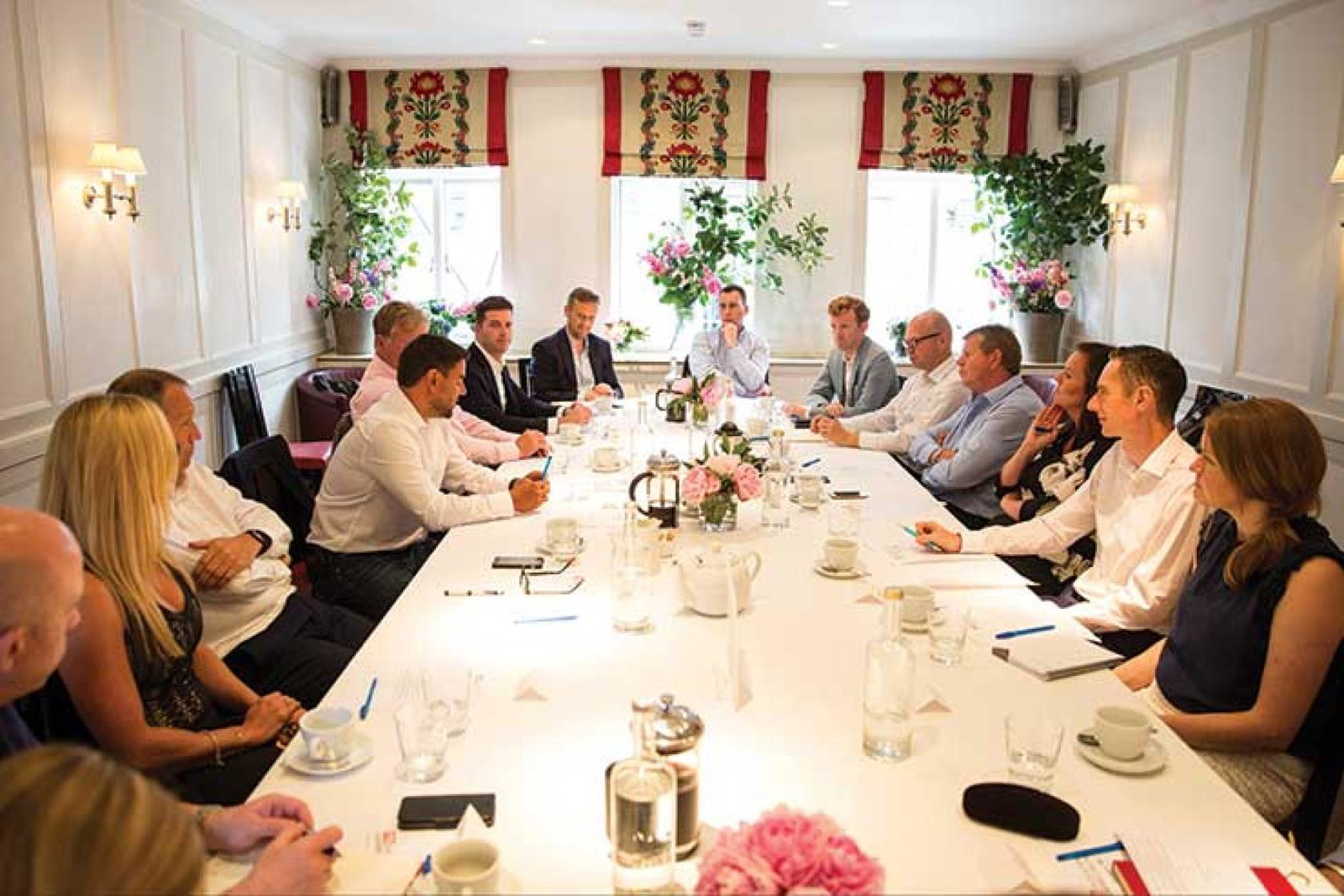
That was the general consensus from the latest TTG Industry Leaders Forum in London last week, held in association with Travelport.
Monarch, The Global Travel Group and The Advantage Travel Partnership were among the companies to report little or no negative impact on sales as a result of the general election on June 8 – indeed John Sullivan, head of commercial, Advantage, said the last few weeks had seen “really strong trading”.
However, most agreed there was a concern that even if Theresa May managed to secure a deal with the Democratic Unionist Party (DUP), which had not been agreed at the time of the forum, uncertainty in the market would remain as the UK braces itself for Brexit.
“Instability is always a concern and I think it’s inevitable there’ll be instability, irrespective of the election result, because there are two years of uncertainty in front of everyone [as the Brexit negotiations play out],” said Gary Anslow, sales director, Monarch.
“We are in a sector where people book 12-18 months in advance and we don’t have any guarantee around freedom of labour movement and open skies,” he added.
Currency concerns
The more specific impact of a poor currency exchange rate was also seen as a concerning factor among the group. “There’s no denying that when you get overseas your money is not going as far,” said Brian Young, UK managing director, G Adventures. “Three years ago you’d get double your money and I think that will play out over time.”
Angela Day, chief executive, Affordable Car Hire, agreed: “America for us is very strong and the feedback we’re having is that the US is becoming quite expensive for people while they’re there.
“The rate of exchange has gone up this week, but it’s a lot more expensive than this time last year… Being an ancillary product, car rental is often a pleasure, not a necessity. We’re having to make sure our packages are very good.”
Guy Chambers, managing director, Black Diamond – a marketing agency whose clients include many in the US – added: “There’s a sense that if the exchange rate dips below $1.20 to the pound, that’s going to really affect [the status quo] way more than anything else… the political side of things is also starting to impact the way people are thinking about going to the US.”
However, Derek Jones, chief executive, Der Touristik UK, observed the recent rise of the “sod it” mentality, when it comes to how far travellers’ money is stretching.
“There was a slowdown when the currency started to have an impact [but] people have realised it isn’t going to change… now we’re through the deferred stage into the ‘sod it’ phase. Last year they went for short-haul instead because long-haul was more expensive, but this year they’re not prepared to trade down.”
Peter Healey, chief executive, Vertical Group agreed: “Because of the low prices we are selling all over the world.”
Elsewhere, Young and Karl Thompson, UK managing director, Sandals Resorts, added that there were worries around whether European staff will be affected.
Meanwhile Andy Stark, managing director, The Global Travel Group, said he was concerned by the lack of clarity offered as to how the new Package Travel Regulations, which are due to come into force in 2018, will look.
“I feel like a lot of really important issues we’re waiting for may be pushed back, like PTD [the Package Travel Directive]. In what other industry do you not know the rules of engagement eight to nine months before [new rules are instigated]?
“All indications suggest that things will be pushed down the [legislative] agenda – such as personal injury claims, which is a massive issue. We need to stand up for the sector.”
Stephen D’Alfonso, head of public affairs, Thomas Cook Group, reminded the table that The Travel Protection Bill was put before parliament last week, “kickstarting the process” for the PTD changes. But he agreed the time-frame for implementation (six months) was tight. “When the UK implements it, it’s very limited [as to] what they can change,” he said.
“A lot of important issues we’re waiting for may be pushed back, like PTD. In what other industry do you not know the rules of engagement nine months before?”
Andy Stark, The Global Travel Group
Unified front
D’Alfonso, who was formerly head of public affairs at Abta, added that collaboration was the best way to get the industry’s voice heard.
“It’s not often that the industry has a list of demands that it wants from government. The challenge is that the demands we do have are big-ticket items that are quite political – that’s why it can be quite difficult to move forward quickly… How do we engage better? Coming together as an industry.”
D’Alfonso summarised that the three “really big policies” to be mindful of as an industry were package travel, the data protection bill that is “going to pretty fundamentally change the way we do business” and the potential change to the (personal injury) claims rules and guidance, which Abta has already started campaigning on.
On this latter point Gary Lewis, chief executive, The Travel Network Group, noted: “Abta should be congratulated on their proactivity… to challenge MPs to make practical changes to the law that will remove the fraudulent claims that are being driven by ambulance-chasing companies which have switched from the whiplash injuries and PPI gold rush.”
Simone Buckley, chief executive, Institute of Travel Management (ITM), added that the Guild of Travel Management Companies (GTMC), which it works closely with, had had some success at government level.
“Paul Wait [chief executive of the GTMC] managed to get on stage at the Conservative Party conference last year and that’s the first time ever that anyone’s had an influence with the government [from a business travel perspective].”
Another area of concern was British Airways’ announcement in May that it plans to impose a fee (of £8 per sector) on bookings through GDSs. It followed Lufthansa’s move to introduce a €16 GDS charge in 2015.
Paul Broughton, regional managing director, UK and Ireland, Travelport, said: “This is a massive issue for TMCs (travel management companies) and there are two camps – much larger TMCs who are less concerned about the surcharge itself but concerned about what IAG is going to do with regards to content.
“Some smaller TMCs look after what we call SME companies. They are very concerned about the surcharge because they feel it will drive direct booking behaviour.”
Richard Dixon, director, Holidaysplease, said he believed the GDS fee would affect the leisure space as well. “If you’re flying to Thailand and Thai Airways is £100 cheaper for a family, people will switch,” he said.
“Some smaller TMCs look after what we call SME companies. They are very concerned about the surcharge because they feel it will drive direct booking behaviour.”
Paul Broughton, Travelport
Attendees
Gary Anslow, Monarch Travel Group
Chris Boba, Travelport
Paul Broughton, Travelport
Simone Buckley, Institute of Travel Management
Guy Chambers, Black Diamond
Stephen D’Alfonso, Thomas Cook Group
Angela Day, Affordable Car Hire
Richard Dixon, Holidaysplease
Peter Healey, Vertical Group
Derek Jones, Der Touristik UK
Gary Lewis, The Travel Network Group
Andy Stark, The Global Travel Group
John Sullivan, The Advantage Travel Partnership
Karl Thompson, Sandals Resorts
Brian Young, G Adventures
Pippa Jacks, group editor, TTG Media
Jennifer Morris, news editor, TTG Media
Daniel Pearce, managing director, TTG Media