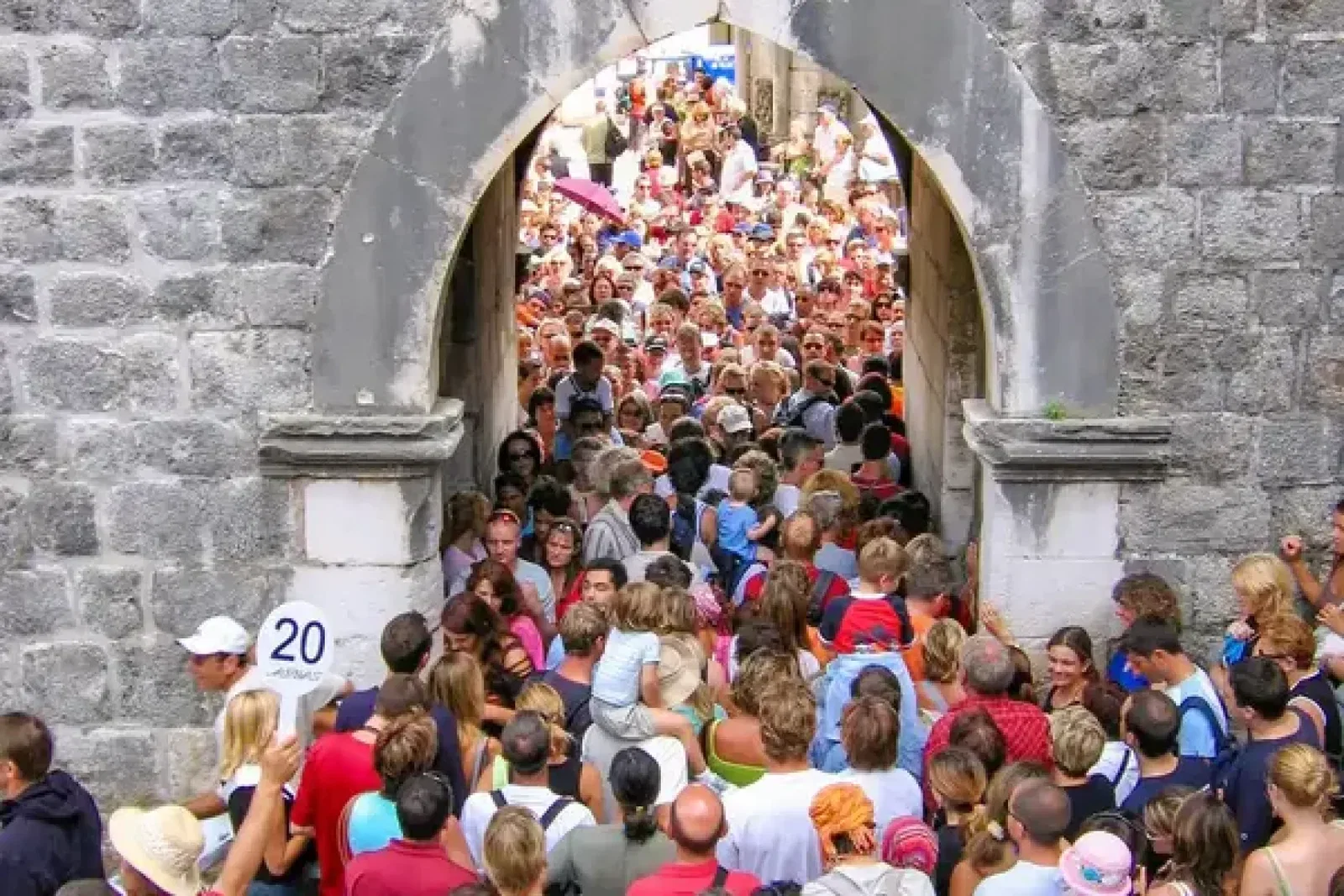
Mato Frankovic had only been mayor of Dubrovnik for a few days in 2017 when negative publicity about the city’s overcrowding reached its peak. The crisis was encapsulated in a headline on The Telegraph website, which screamed: “Crowds and cruise ships have ‘ruined’ Dubrovnik”.
The destination’s popularity had soared after it was used as a film location in the popular television series, Game of Thrones, and in 2018 CNN placed the Unesco World Heritage site on a list of 12 destinations to avoid. “Dubrovnik became a victim of its own success,” says Frankovic.
The medieval city was under siege – from overnight visitors, day visitors and cruise passengers – and it was visibly under strain. Its economy was dependent on tourism, but there were bottlenecks around key infrastructure (which was also a security issue), the quality of the tourism experience was being degraded and a unique heritage site was threatened.
Frankovic was born in Dubrovnik and had lived his entire life there, and so the criticism felt very personal to him: “It felt like an attack on our way of life. It was a wake-up call,” he says. “I knew we had to take action. Not temporary or cosmetic changes, but a long-term plan that would protect both our heritage and our quality of life.”
Cruise control
In 2017, Dubrovnik was a common cruise call for ships on their way in and out of Venice. There were often four to six ships docking in the city simultaneously, staying for approximately three to four hours. “Cruise passengers came, they took a few photos and they left, because there was no more time,” explains Frankovic.
Conscious that he needed to treat the cruise lines as Dubrovnik’s partners, not its enemies, he reached out to Clia officials for their help in gathering cruise line CEOs together for a summit in November 2017.
“I needed them to understand, if we were able to provide a better service, they would be able to provide a better experience for their passengers.”
It took two years to establish the changes agreed – no more than two ships would call in Dubrovnik at the same time, and they would stay for a minimum of eight hours, allowing time for excursions.
“Of course, we lost some partners, they did not all want to operate in this way, but when not all the passengers are directed to the Old City, it’s an opportunity for cruise lines to sell excursions,” he explains.
Further changes were rolled out. The number of outdoor cafe tables and chairs in the Old City were reduced by 30% and souvenir stands were cut by 70%, particularly from crowded pedestrian areas.
“Of course, those business owners were angry,” he admits. “But the future of the city is more important than electoral votes.”
In 2020, a reservation and pre-payment system was initiated for tourist buses – to reduce traffic congestion and the burden on the city’s gateways.
“Buses must now book their arrival slots in advance, and the main drop-off/pick-up point is at Pile Gate – under strict time controls to avoid congestion at the city entrance.”
The Dubrovnik Pass was relaunched digitally in July 2022. For roughly the same price as a ticket to the city walls, visitors now have access to the city’s main attractions plus bus routes within the city limits. Buying the pass online already saves money and time in ticket queues, and later this year the plan is to go a step further, enabling visitors to pre-book timed slots for attractions.
Harnessing smart technology
In 2024, sensors were installed to count visitor numbers within the Old City – the data feeds into apps that allow city officials and visitors to see the flow of visitors in real-time. “This lets us actively manage flows and promote alternative routes or destinations,” remarks Frankovic.
This data was also shared with the University of Dubrovnik, and their study confirmed something Frankovic’s team had suspected: the problem wasn’t just the total number of visitors, but how and when they move through the city. The concentration of people at specific times and locations was the real issue.
He explains: “Thanks to the people counters and smart analysis, we’ve learned how to spread visitation more effectively and adjust the timing of arrivals, especially from cruise ships and tour buses. As a result, we’ve reduced flow density by nearly 50% since 2017, and visitor dispersion across the city has improved significantly.”
By the summer of 2022, tourism numbers were approaching pre-pandemic levels, but the feeling in the city was completely different. “We had the volume, but not the chaos,” says Frankovic. “Citizens were once again spending time in the Old City during peak hours. Business owners, who were initially sceptical of our restrictions, began to thank us. One morning I walked down Stradun and overheard a local say, ‘We can finally breathe again.’ That comment stayed with me. I knew then that we were on the right track.”
Destination vs home
Dubrovnik is a classic example of a place that visitors call a “destination” but other people call it “home” and the former often forget the latter exist. “But the citizens, they are the most important,” he says. “The waiters, the receptionists, the taxi drivers… you want them to wake up in the morning with a smile, because they provide the experiences.”
No doubt Frankovic has had some difficult conversations along the way, but ultimately the citizens have backed him, because he was re-elected in 2021. And now he’s sharing Dubrovnik’s learnings with the authorities in Paris, Barcelona, Venice and Amsterdam.
But he’s not complacent to believe Dubrovnik is “fixed” – the work continues on long-term solutions that will strengthen the city’s position as a sustainable destination.
He says that infrastructure upgrades are on the horizon, aimed at improving connections between the city and its surrounding areas, making alternative locations more accessible and appealing to visitors. Plans also centre on promoting lesser-known but equally valuable cultural and natural sites, both in and around Dubrovnik, to reduce pressure on the Old City and enrich the overall visitor experience.
Frankovic may be the hero in this modern-day renaissance tale, but he and his team cannot do it alone: “To travel agents, my message is simple: help us tell a deeper story of Dubrovnik. Encourage your clients to explore beyond the walls, to discover our local communities, landscapes, traditions, and cuisine. Responsible travel begins with responsible recommendations.
“At the heart of all these efforts is one unwavering belief: that we owe it to future generations to protect what we have. The interests of the city are much higher than the interests of the individuals. We need to think about our future. And if Dubrovnik is to remain the “Pearl of the Adriatic”, then we must ensure it continues to shine – for everyone.”