March 2013 was a blip in G Adventures’ growth path. Monthly sales have been at least 40% up year-on-year every month since then.
“But it was only 39.7% in March 2013, so I was not happy,” jokes the company’s founder, Bruce Poon Tip.
In fact, Poon Tip is a man more likely to be happy than most, since he holds the idea of karma, and the pursuit of happiness, dear.
His business is giving him reasons to be cheerful too, as G Adventures had a record turnover of more than £108 million last year, selling tours to clients in more than 160 countries.
The small group touring specialist has in fact grown 30-40% every year since it began in 1990, even in the recession. It is now the largest of its kind in the world.
“There should be a ceiling,” Poon Tip admits. “At some point we have to be happy with 20% growth; I’ve started prepping people for that. We never expected to grow so much.”
Adventure travel is itself a growing market, he says, but it’s not growing as quickly as G Adventures. “We’re taking market share away from our competitors. In 2007, all of us were growing, but now none of them are growing as much as us,” he claims.
If the number of accolades that G Adventures has won is any indication, then rapid growth has not come at the expense of the product; with up to 80 awards received around the world each year, the trophy cabinet at Toronto “Base Camp” has given way to an entire trophy wall.
“The guaranteed departure was huge; we doubled our capacity and locked down the industry.”
Bruce Poon Tip
When so many rival operators offer arguably similar tours, something has clearly made G Adventures stand out.
Poon Tip highlights two initiatives that he sees as being game-changers. In 2009, G Adventures introduced a “lifetime deposit” guarantee that meant customers could change or delay their trip without losing their deposit, while in September 2012 the operator announced that all of its tours would be “guaranteed departure”, instead of a minimum number of bookings being required.
Both measures improved customer service and offered maximum flexibility. “The guaranteed departure was huge; we doubled our capacity and locked down the industry,” he says.
But making it easier for customers to say yes also makes it easier for travel agents to sell. “The whole thing was for the travel agent; agents are our number one customer,” he insists, stating that agents and wholesalers make up 80% of sales in the UK.
And on stage at the recent Future of Tourism event at the Royal Geographical Society, which doubled as the UK launch of his new book, he even interrupts his own presentation to entreat the audience to “go to your nearest travel agent when you want to book travel”.
Poon Tip is uncharacteristically secretive about what the next “game-changing” concept might be, promising it will be revealed at the next G-Stock meeting in Toronto in September: “Normally I’m all about sharing ideas, but we have such aggressive competitors. We have a vested interest in keeping it quiet.”
Creating a community
Poon Tip recognised early on that G Adventures customers form a powerful community of brand advocates, and saw the opportunity to harness that community to achieve a greater purpose.
In his new book he calls this “transcending the product”: engaging customers with the company’s values to such an extent that this community can be “mobilised”, enabling the business to go beyond the purpose of a traditional travel company.
The concept of “paying it forward” - tackling poverty and inequality in the places G Adventures visits - has also strengthened brand engagement from both customers and staff.
Not-for-profit foundation Planeterra, set up in 2003 by Poon Tip, has now raised more than £809,000 for health, education, environmental and other projects around the world, funded entirely by G Adventures’ customers, and even non-customers.
Last year, Planeterra entered into a partnership with the Inter-American Development Bank Group to deliver development projects in South America.
Having been named Canada’s “Entrepreneur of the Year” twice, Poon Tip has been frequently asked if he will write a book, but he’s resisted until now, unconvinced that he “had something to say”.
Finally, after 24 years in business, he has written Looptail, which describes his early career (including getting fired from McDonald’s), the formation of the company and the difficult decisions he has had to make along the way.
He recounts a trip to Tibet in 1997 during which he realised he was at a crossroads with the business, and would have to make significant changes to senior management in order to move forward.
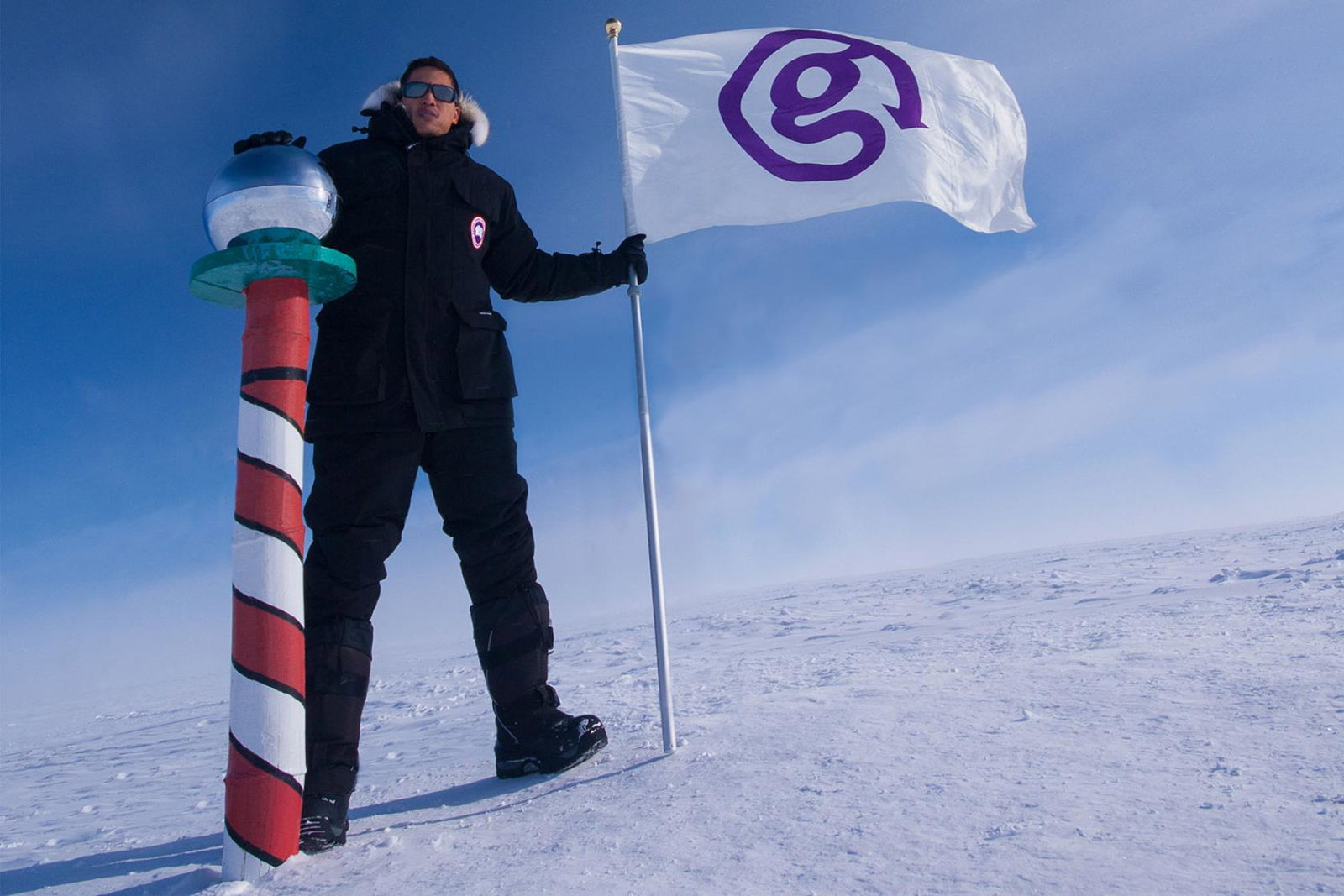
Even the company’s logo, and the title of the book, has a link to Tibet’s spiritual leader, the Dalai Lama: “looptail” refers to the tail of the letter G in the company logo, which curls round to form an O. The initials GO also stand for Great Ocean, which is how “Dalai Lama” translates into English.
A chance meeting with an old friend from Tibet led to Poon Tip being invited to meet His Holiness himself in 2009 - a meeting that prompted him to finally put pen to paper and tell his story.
He hopes his advice will convince other companies that putting social responsibility at the heart of the business is not only “doing the right thing”, but makes business sense too.
And travel companies have greater potential than most to change the world, he concludes: “Imagine if all you had to do to give back was go on holiday?”
HR, G Adventures-style
Making work meaningful for employees careful team-building has been key to G Adventures’ success, says Poon Tip. Here are extracts from Looptail, describing his approach:
- Four conditions create the environment in which you can achieve happiness: the ability to grow; being connected; being part of something bigger than yourself; and freedom. Happiness is free and available to those who want it. You just have to decide that you deserve it and that you want to achieve it.
- [To employees:] In order to be a star, you have to contribute in other ways. You can be good at your job to stick around, but if you want to grow and develop in the company, you have to contribute to our culture.
- Hiring someone who’s more of a friend is often a bad idea. Hire people who are not like you, whose style is so different that sometimes they irritate you. These are generally individuals who have skills you don’t.
- Our business model is about change. This is why we focus on happiness, because studies have shown that most unhappy people fear change. The greatest gift you can give any business is the ability to be nimble, and to be that, it takes a culture that embraces change.