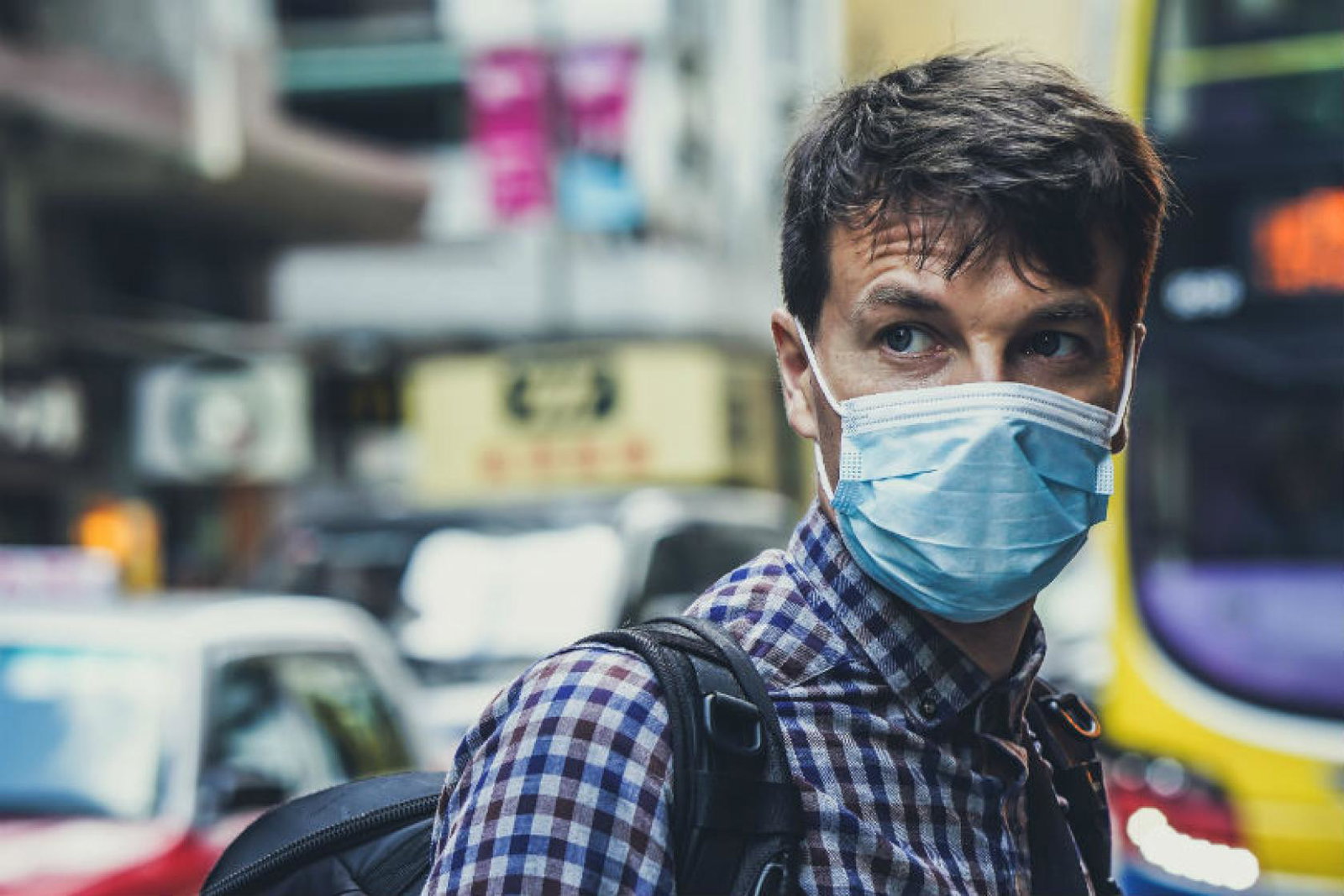
The association said while masks would reduce the already "low" risk of Covid-19 transmission on aircraft, social distancing measures – such as leaving middle seats empty – could bring "dramatic cost increases to air travel" in excess of a third.
Face coverings for both passengers and crew should become a "critical part" of a "layered approach" to biosecurity when people return to air travel, Iata said on Tuesday (5 May).
"Evidence suggests the risk of transmission onboard aircraft is low," said Iata general secretary and chief executive Alexandre de Juniac.
"We will take measures such as the wearing of face coverings by passengers and masks by crew to add extra layers of protection.
"We must arrive at a solution that gives passengers the confidence to fly and keeps the cost of flying affordable. One without the other will have no lasting benefit."
Other biosecurity measures proposed by Iata include temperature screening passengers, airport workers and other travellers; introducing boarding and disembarkation processes that reduce contact between passengers and crew; limiting movement within the cabin during flights; more frequent and deeper cabin cleaning; and simplified catering processes to reduce passenger-crew contact and interaction.
Further down the line, Iata believes widespread Covid-19 testing and immunity passports could add to these biosecurity measures.
Citing an "informal survey" of 18 major airlines during January, February and March this year, Iata said there were just three episodes of suspected in-flight transmission of Covid-19, all from passengers to crew.
A further four, said Iata, were reports of "apparent transmissions from pilot to pilot" and could have occurred before or after the flight, or during layover. "There were no instances of suspected passenger to passenger transmission," the association added.
A more detailed study, also carried out between January and March, of contact tracing of 1,100 passengers confirmed to have Covid-19 after air travel revealed no secondary transmission among more than 100,000 other passengers in the same group of flights, and two "possible" cases among crew.
Iata believes there are several reasons why transmission onboard aircraft is low, which include: passengers facing forward and having limited face-to-face interaction; seats preventing transmission to those in front; onboard air flowing from ceiling to floor; and a combination of efficient air filters and fresh air circulation onboard.
"The cabin environment naturally makes transmission of viruses difficult for a variety of reasons," said de Juniac. "Screening, face coverings and masks are among the many layers of measures we are recommending. Leaving the middle seat empty, however, is not."
De Juniac added it was unlikely longer term measures such as mass testing, immunity passports or a vaccine would materialise before it was necessary to restart the industry. "That’s why we must be ready with a series of proven measures," he said.
Iata also stressed onboard social distancing would cut maximum load factors to around 62%, "well below the industry average breakeven load factor of 77%".
"With fewer seats to sell, unit costs would rise sharply," said the association. "Compared to 2019, air fares would need to go up dramatically – between 33% and 58% depending on the region – just to break even."