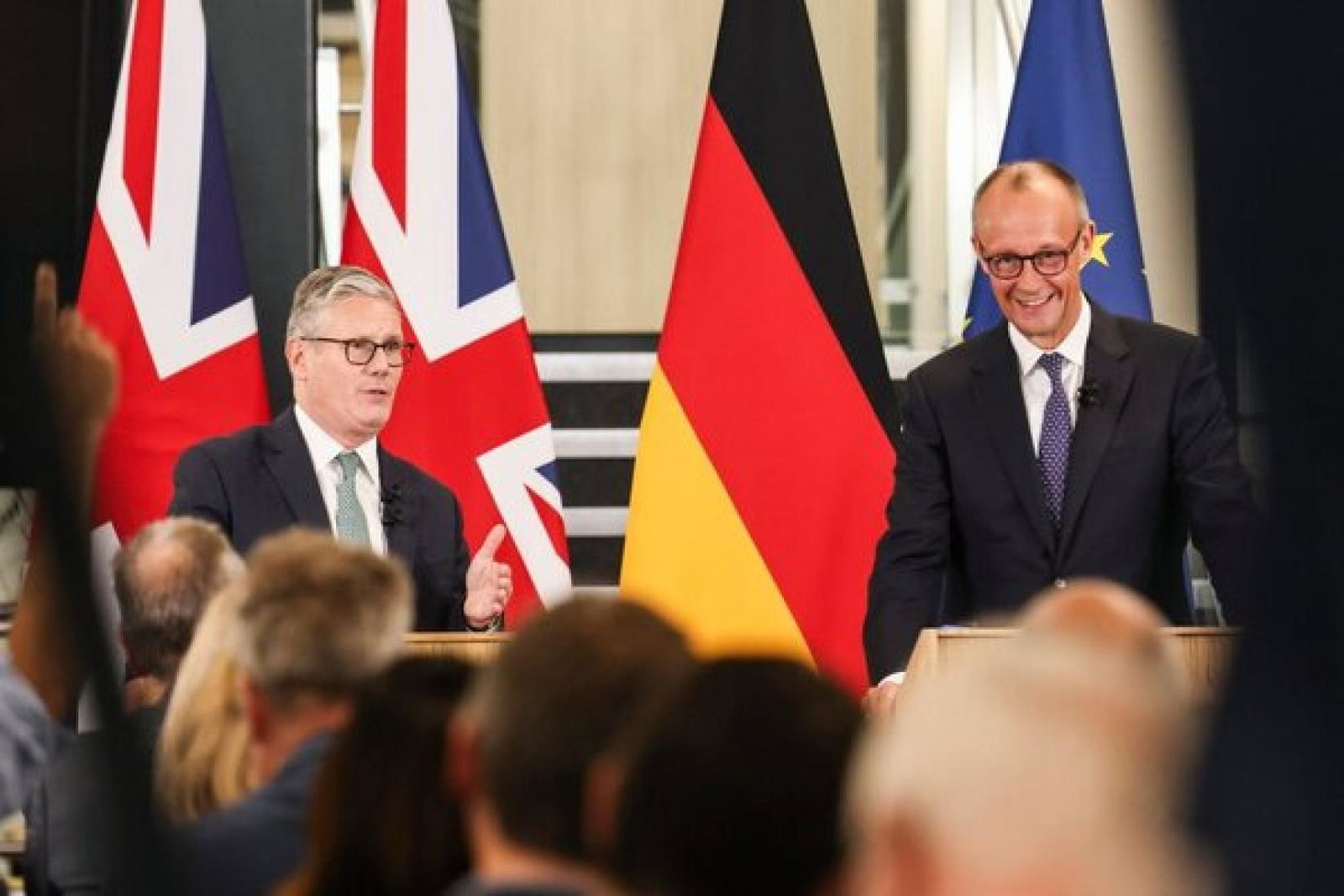
The wide-ranging treaty, which was signed by prime minister Keir Starmer and new German chancellor Friedrich Merz on Thursday (17 July), will see the creation of a joint taskforce to “address the barriers” to establishing long-distance rail services between the UK and Germany, including the implementation of border and security controls.
German authorities are also planning to allow UK passport holders to use e-gates at its borders. This will initially be available to frequent travellers by the end of the summer and then be extended to all UK visitors to Germany “as soon as possible”. UK passport holders have not been able to use e-gates at German ports since Brexit.

Plans to create a direct rail service between London and Berlin, which could start within the next 10 years, came in the same week as the UK and French governments signed a declaration pledging to open up competition on the cross-Channel rail market and end Eurostar’s monopoly.
Transport secretary Heidi Alexander said: “The Brandenburg Gate, the Berlin Wall and Checkpoint Charlie – in just a matter of years, rail passengers in the UK could be able to visit these iconic sights direct from the comfort of a train, thanks to a direct connection linking London and Berlin.
“This landmark agreement has the potential to fundamentally change how millions of people travel between our two countries, offering a faster, more convenient and significantly greener alternative to flying.
“A new taskforce will bring our nations closer together and create new opportunities for tourism, business and cultural exchange, building on a landmark deal we signed earlier this year to explore introducing direct services to Switzerland.”
Eurostar last month announced plans to start new routes from London to Frankfurt and Geneva when it receives new trains in the early 2030s.
Several potential competitors, including Richard Branson’s Virgin Group and the owner of Italian train operator Trenitalia, have also expressed an interest in taking on Eurostar by running services from London to continental Europe.
Launching a UK-Germany rail service is not a new idea – German state-owned rail operator Deutsche Bahn announced plans in 2010 to run services between the two countries starting in 2013. But the project was quietly shelved a few years later as DB struggled to overcome technical and regulatory hurdles.
The inclusion of a UK-Germany rail service is part of the treaty’s wider aspirations to “enhance transport connectivity and collaborate in the field of sustainable, innovative and universally accessible transport solutions and mobility”. The two countries have also vowed to work together to decarbonise transport services.