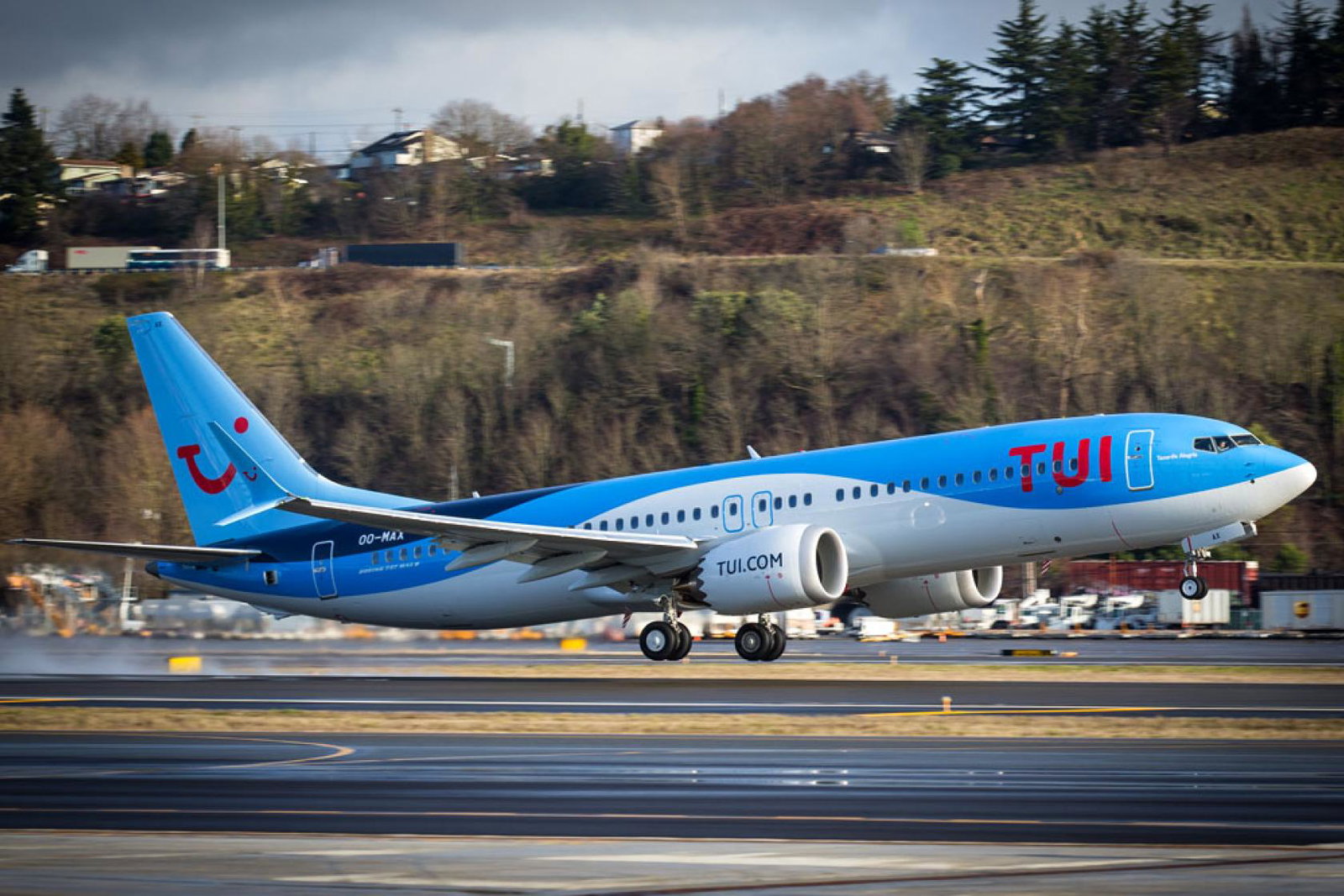
Tui says reducing its carbon footprint through new, more efficient green aircraft is the biggest environmental challenge it faces.
The tour operator on Friday (June 15) released its 2017 sustainability report, setting out what it has achieved to date - and the work it still has to do to become a more responsible operation.
Its 2017 reports marks the mid-point in its Better Holidays, Better World strategy, detailing its environmental and sustainability objectives between 2015 and 2020.
Tui’s ambition is to operate Europe’s most carbon efficient airlines by reducing the impact of its schedule by 10% come 2020.
Citing the 2017 atmosfair Airline Index, Tui Airways and Tuifly Germany are ranked first and third in the world for carbon efficiency, while the operator says it is 24% more carbon efficient than six of its major European rivals, according to their own March 2018 data.
Tui has taken delivery of the first of 72 new Boeing 737 MAX aircraft, which emit around 14% less carbon dioxide than the previous generation.
Its cruise operation, meanwhile, has achieved a 5.5% reduction in carbon emissions per cruise passenger per night since 2015.
Andrew Flintham, managing director Tui UK and Ireland said: “We are absolutely committed to delivering our Better Holidays, Better World strategy in the UK and we are delighted our airline is ranked as the most carbon-efficient in the world.
“With over 80% of our carbon footprint coming from our aircraft, investing in more efficient planes is key. The delivery of 16 new Boeing 737 MAX by end of 2020 in the UK will support the delivery of our commitment to further reduce the carbon intensity of our operations offering up to 14% less carbon emissions than our previous comparable aircraft Boeing 737-800.”
The new report charts Tui’s initiatives against the UN’s sustainable development goals to gauge the company’s impact on the economies, societies and environment in countries it operates, what it is doing to ensure tourism benefits local communities, and how it is ensuring human rights are protected throughout its supply chain.
Tui has pledged to invest €10 million a year to 2020 to enhance the positive impact of tourism through the Tui Care Foundation.
The foundation’s ambitions aim to improve the life chances of more than 100,000 children and young people, protect the welfare of one million animals, participate in projects to save resources, and enhance 10,000 local livelihoods through tourism.
Thomas Ellerbeck, Tui’s group executive committee member for sustainability, said: “From the introduction of extremely carbon-efficient aircraft to hotels with recognised high environmental standards, [and] from excursions characterised by their sustainability criteria to projects which facilitate vocational training for local youth in the growing tourism sector, Tui’s sustainability strategy stands for a holistic approach to the challenges of sustainable tourism across the entire value chain of a holiday.”