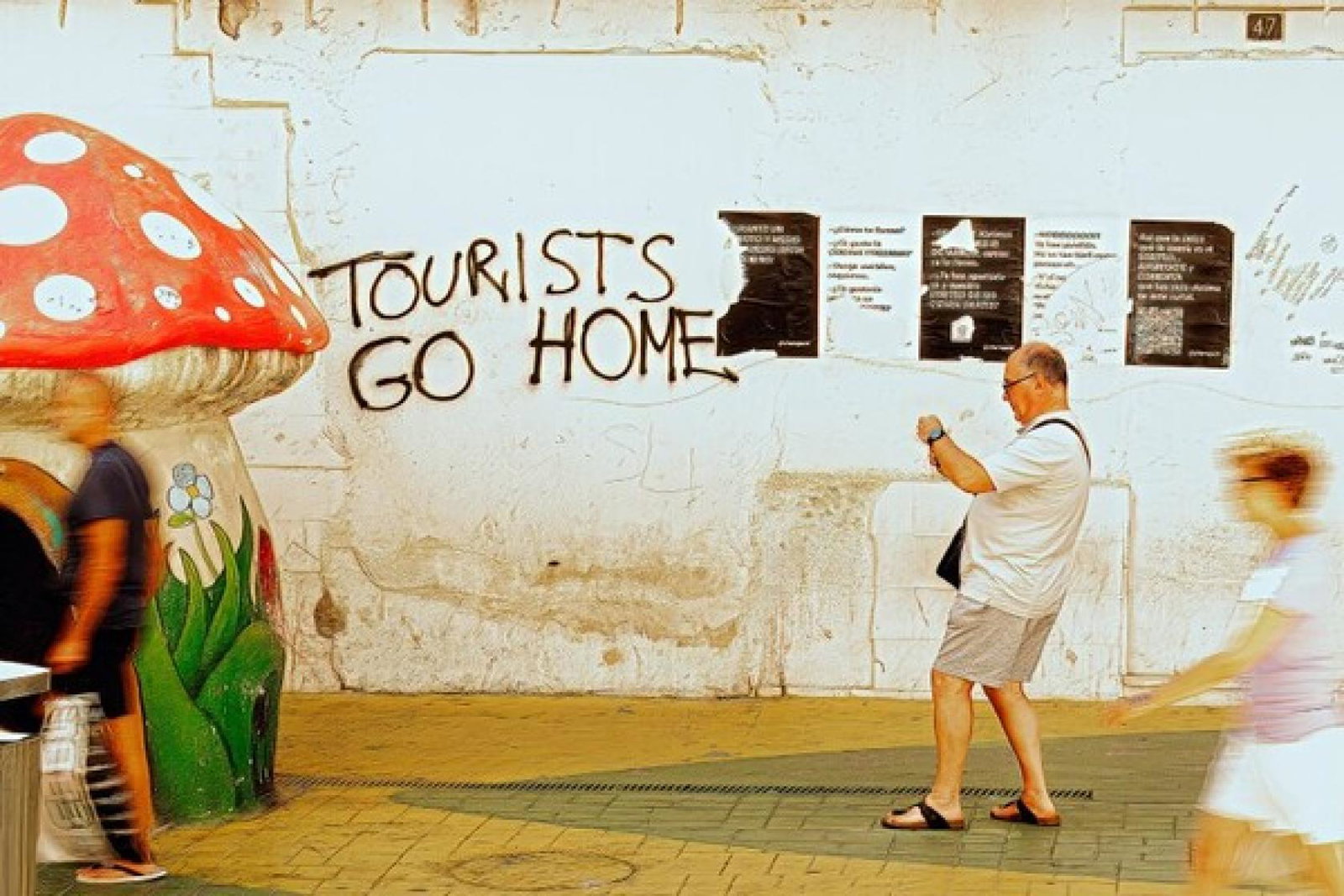
Anti-tourist sentiment isn’t a new phenomenon; in 2017, "refugees welcome, tourists go home!" graffiti appeared in Barcelona and was seen in several other major destinations.
Angry locals have protested tourism in their towns and cities by targeting tourist transport – even going around squirting coffee-drinking visitors with water pistols.
The post-pandemic rebound has resurfaced many of these issues, bringing with it a new wave of activist anti-tourist sentiment, which in turn risks harming guests’ experiences.

With travel reportedly now supporting more than 10% of jobs globally, directly and indirectly, people feel overrun. Yet some destinations are reliant on tourism income.
The World Travel and Tourism Council was expecting GDP from tourism to top $11 trillion in 2024, an increase of 7.5% compared with 2019, and to reach $16 trillion by 2033 – an increase of nearly 50% in less than a decade.
While this growth excites the industry, for embattled tourism-dependent communities the prospect is chilling. So what’s driving this backlash? The negative impacts on the ground are complex, and often inter-related.
These are just some of them:
- Overburdened infrastructure and resources – roads, public transport and healthcare is stretched to the limit in some destinations, leaving locals to worry about basic needs. Water shortages, like those seen in Cape Town and Barcelona, feel unjust when tourists enjoy pools and golf courses.
- Housing shortages – in cities like Barcelona and Venice, short-term rentals drive up housing costs, forcing locals out of their neighbourhoods. A recent study found the cost of renting a single room in Barcelona now exceeds what it took to rent an entire apartment in 2019. The city’s mayor has vowed to revoke more than 10,000 licences for tourist flats.
- Cultural erosion – overcrowding at sacred sites and visitors ignoring customs make locals feel their heritage is being exploited. Viral stunts, such as racing through Angkor Wat, have also damaged fragile sites.
- Environmental degradation – mass tourism has the potential to pollute and destroy natural habitats in fragile destinations, threatening the very attractions that draw visitors in.
At the heart of these issues lies the stark inequality in terms of who prospers from the economic benefits of tourism. While tourism generates significant revenue, much of it is siphoned back to wealthy nations through “economic leakage”.
In the Galapagos, only 15.5% of tourism revenue benefits residents, and leakage rates reach 70% in Thailand and 80% in Mauritius. This leaves local workers with low wages and unstable jobs, fuelling resentment as communities see little reward.
Meanwhile, tourism is perceived as catering to a wealthy minority; only 4% of the global population flew internationally in 2018. Contributing factors include foreign-owned operators, airlines and hotels paying minimal local taxes, as well as aggressive tax planning, imported goods, deployment of foreign staff and a lack of local capital for infrastructure investment.