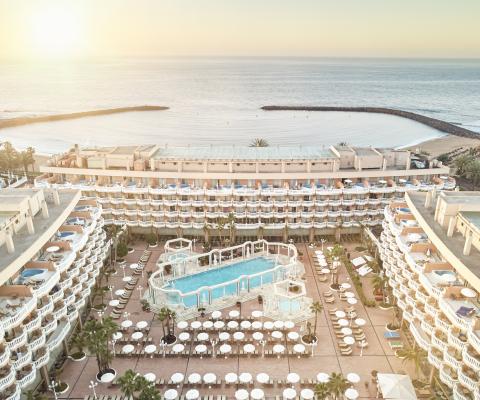
There’s rarely been a more exciting moment in luxury travel, when innovation and experiential travel are firing people’s imaginations, alongside a higher- than-ever desire to travel in search of ways to fulfil passions, connect with family or push yourself out of the comfort zone. Here’s our guide to 10 of the biggest trends and ideas shaping demand for luxury travel in 2026.

Year of sport
Research by Marriott found 45% of Brits plan trips based around watching or participating in sport and 2026 certainly promises to be a bumper year for sports travel, including the Winter Olympics in Italy and then the big one – football’s Fifa World Cup across North America.
The Milano Cortina Winter Olympics kicks off at 15 venues from 6-22 February, with most events taking place in Milan and the ski resort of Cortina d’Ampezzo. It will be followed by the Paralympic Winter Games from 6-15 March; these resorts are bound to inspire snow-loving clients.
The Fifa World Cup will be held in 16 cities across the US, Canada and Mexico from 11 June to 19 July, with the final being staged at MetLife Stadium in New Jersey, where ticket prices start at around £1,500 per person. “We have had requests for tickets for the key stages of the World Cup in July, as well as the Winter Olympics,” Carrier’s head of product Rebecca Turner said.
Meanwhile, sports specialist Spectate highlights the appeal of England cricket tours to Sri Lanka and South Africa, as well as Formula 1 races such as the iconic Monaco Grand Prix and the introduction of Madrid as a race location in September. “It is great to have another F1 event so close to the UK, and I am confident this will appeal to clients both new and repeat,” Jimmy Rowan, head of Spectate, added.
Looking to the skies
Witnessing the northern lights features highly on many people’s bucket lists, and these coming months offer the perfect viewing opportunities as the aurora borealis reach what Abercrombie & Kent names as an “electrifying crescendo”.
The lights will be at their brightest through to March, as they reach the peak of their solar cycle, which won’t be repeated until 2037, all of which is expected to further drive demand for Nordic destinations.
Another natural phenomenon will be a total solar eclipse across key European destinations on 12 August – it will be viewable in parts of Iceland and across a swathe of northern Spain including the ever-popular Balearic Islands. According to A&K, astrotourism is “luring more eyes-on-the-skies travellers than ever”.
Remote control
With so much focus on offering more exclusive experiences and escaping the crowds in big-name destinations, particularly at peak travel times, it’s no surprise that many operators are expanding into lesser-known and more remote regions.
Black Tomato highlights areas of Brazil, including stretches of the Amazon, which have been opened up by new luxury properties and boating expeditions, allowing visitors to enjoy “immersive nature and cultural experiences, paired with new standards of comfort”.
Also in South America, A&K is highlighting Peru’s ancient city of Choquequirao, often described as Machu Picchu’s “sister city” due to its scale and complexity. Currently, the complex can only be reached on foot and its annual visitation is lower than what Machu Picchu sees during just one day.
In Africa, Scott Dunn is promoting Zambia’s Liuwa Plain National Park as an alternative to the well-trodden Great Migration route through Kenya and Tanzania. The Zambian national park is home to the second largest wildebeest migration on the continent and only has one permanent safari camp, King Lewanika Lodge. The operator also suggests visiting Kumana National Park in Sri Lanka instead of the more famed Yala, where a tented camp experience is offered by Kumana Under Canvas, and the chance to spot elusive leopards is a big draw.
Going solo
Another trend expected to continue strengthening in 2026 is the increasing number of solo travellers. Travel association Abta has said that 19% of UK consumers went on a solo holiday in the past year – up from 17% in 2024 and the highest level this decade.
While the Abta report reveals those under 44 were most likely to go solo, separate data from Wanderlust shows older consumers are also increasingly happy to travel on their own.
Expedition voyages are a popular option for lone travellers, with 32% of those booking these cruises going solo, according to the magazine’s research. This strong demand is also reflected by Ponant’s recent decision to waive single supplements for solo passengers on its voyages.
The adventurous nature of many solo travellers has led to a 30% rise in bookings from this market for specialist operator Wild Frontiers over the past year too, with India, Kyrgyzstan and Uzbekistan set to be the most popular destinations for solo passengers in 2026.
Wild Frontiers chief executive Clare Tobin puts this down to solo travel becoming “much more accessible over recent years”. “Small-group tours are a great option for people who want to travel independently while meeting other like-minded people,” Tobin said. “We’re finding that couples who don’t share the same bucket list are choosing to go solo too.”
Kids calling the shots
While the growth of multi-generational family groups travelling together has become firmly embedded since the pandemic, research by Scott Dunn suggests teenagers are now “strong influencers” in family travel decisions.
The operator found 70% of teens are giving their parents ideas on where to go, while 40% have succeeded in changing the family’s final choice of destination.
Other family-orientated trends include higher demand for “legacy” safaris, where groups can combine wildlife experiences with work on conservation projects, which Abercrombie & Kent says can create “deeper emotional connections to wildlife preservation”.
Meanwhile, Black Tomato says families are beginning to “create annual traditions or epic new rituals that everyone looks forward to year after year”. This also includes “a clear appetite” among these groups for activities centred around nature.
On the conservation theme, National Geographic-Lindblad Expeditions has just rebranded its youth engagement programme as National Geographic Explorers-in-Training, which offers a range of hands-on activities for younger guests on the expedition specialist’s voyages.
Yacht-style cruising
Every year seems to be a big one for new ships, but 2026 will see some significant moves in the luxury market, with major brands Orient Express and Four Seasons both poised to follow in the wake of Ritz-Carlton’s Yacht Collection, which launched in 2022.
In March, Four Seasons I will make its much-anticipated debut with 95 “residential-style” suites on a 14-deck yacht. This will be followed in June by the 54-suite Orient Express Corinthian.
Established cruise brands will be busy too, with the scheduled launches of Regent’s Seven Seas Prestige, Explora III by Explora Journeys, Emerald Cruises’ latest oceangoing ship Emerald Kaia and Star Explorer by Windstar, among others.
These new ships should help drive sales, and Carrier’s Rebecca Turner said cruise bookings are “gaining momentum month-on-month” as the operator expands coverage of the sector.
Expedition voyages are also a big draw, with Secret Atlas pioneering “micro” cruises with just 42 passengers on trips to Antarctica and South Georgia from October 2026.
Meanwhile, revolutionary brand Selar will make its debut, offering 36-passenger Captain Arctic, the first solar-powered vessel to sail the Arctic, with close to zero carbon emissions.
Elsewhere, in June, Aqua Expeditions’ new icebreaker-superyacht Aqua Lares makes its debut to cover the extremes: from East Africa, where it will sail through the biodiverse waters of the Seychelles – including the remote Aldabra Atoll – as well as Zanzibar, and then on to Svalbard and The Arctic Circle.
Korea moves
Korean culture has been busy conquering the world in recent years – from ubiquitous K-Pop to its ground-breaking cinema and TV, not to mention its increasingly popular cuisine, so it's no surprise 'K Travel' is also becoming more popular.
The destination will get a major boost in 2026, with Virgin Atlantic due to start long-awaited flights from Heathrow to Seoul in March. With overtourism becoming more of a problem in neighbouring Japan, operators such as InsideAsia and Red Savannah are even suggesting South Korea as an alternative destination to see cherry blossom in spring.
South Korea should also see plenty of momentum in the coming years with hotel companies such as Rosewood, Aman’s sister brand Janu and Mandarin Oriental due to open properties.
Rail resurgence
With more and more luxury trains being introduced around the world, including the UK’s very own Britannic Explorer by Belmond, it’s not surprising rail is gaining more traction with clients.
Scott Dunn reports a 14% increase in rail bookings over the past year, with the launch of La Dolce Vita Orient Express in 2025 marking a “milestone for luxury rail travel”.
It’s not just a European phenomenon, with Andean Explorer in Peru introduced in 2017, proving popular as South America’s first luxury sleeper train, while The Ghan in Australia will raise the bar with two larger, upgraded suites from this April.
Specialist operator Railbookers is offering 11 luxury train routes in 2026, including a 60-day Around the World by Luxury Train itinerary, combining eight train routes in nine countries, starting with the Rocky Mountaineer from Vancouver.
Original Travel has seen a huge rise in bookings and enquiries for trips by train. Bookings in September were up 37% up year-on-year, and in response the operator has launched its first ever train brochure, featuring their top picks of the world’s most beautiful rail routes.
Season shifts
The trend of holidaymakers choosing more temperate destinations in the peak summer season – what have become known as “coolcations” – continues unabated as traditional European hotspots experience record heatwaves.
This is particularly benefitting Nordic destinations such as Norway, Sweden and Finland, but there is also more demand for shoulder seasons in the spring and autumn – not just for the cooler temperatures but also for better prices and fewer crowds.
Operator Red Savannah says 44% of enquiries for gulet charters in the Med are now for dates within shoulder seasons – up from 36% in 2024. Meanwhile, demand for villas in June and September is now rising at a faster rate than the peak months of July and August.
“We put this down to a combination of people seeking the more competitive rates available in shoulder season, fewer crowds and more choice without compromising on weather,” according to Red Savannah’s director of marketing Sarah-Leigh Shenton.
Don’t-miss debuts
And finally – keeping tabs on a bumper batch of upmarket resorts across the world is key, along with some returning favourites that have undergone extensive renovations. In Europe, luxury operators say they are excited about the latest Ikos all-inclusive resort, Ikos Kissamos, which will be the brand’s first property on Crete. Also, highly anticipated is Mandarin Oriental Punta Negra in Majorca and Six Senses Milan as well as new Rocco Forte outposts on the Italian islands of Sicily and Sardinia. It should also be a banner year for luxury openings in Sardinia, with Mandarin Oriental and Cheval Blanc properties also scheduled to open in 2026.
On the long-haul front, Dorsia Travel’s Tom Cahalan highlights upcoming Bulgari, Mandarin Oriental and Here resorts making their debut in the Maldives, as well as legendary safari camp Singita’s first lodge in Botswana and the long-awaited return of Fregate Island in the Seychelles, which has been closed for four years for a major revamp.
Want to discover more luxury trends?
Apply now to attend Black Book – a new luxury travel event designed to build relationships and help travel designers unlock insight into the future of luxury travel.
Enjoy curated one-to-one meetings with leading luxury brands and delve into an inspiring conference programme, where travel designers can gain first-hand understanding of how to future-proof their business.