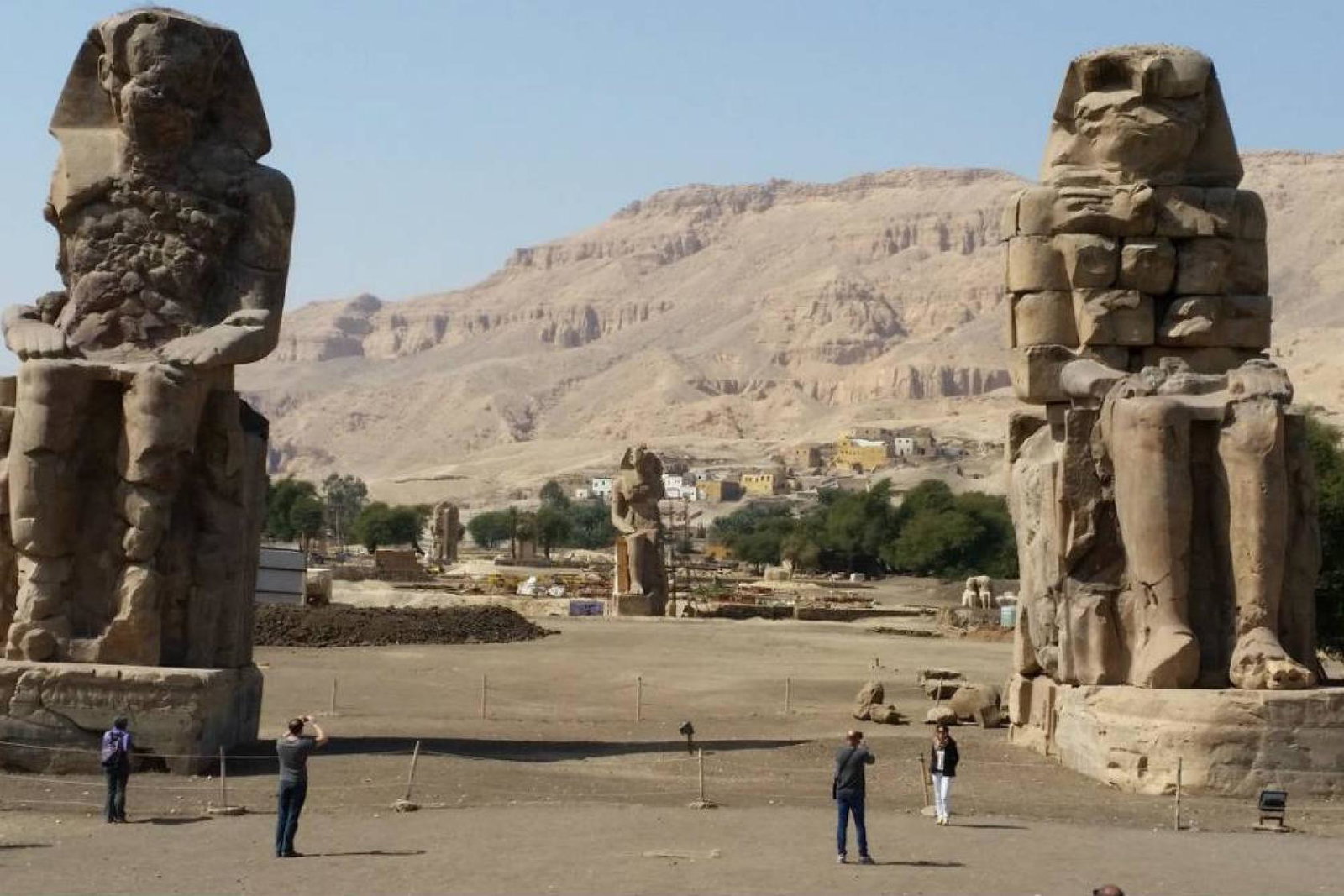
Hisham El Demery, general manager of Egypt’s Tourism Development Authority, said the archaeological find, near to the city of Luxor, was helping to increase travel demand from tourists and hoped more discoveries would interest visitors, the Independent reports.
"These discoveries are positive news from Egypt’s tourism industry, which is something we all really need," he said.
Tourism to the country has suffered difficulty following the toppling of former president Hosni Mubarak in 2011 with political unrest and the downing of a Russian passenger plane returning from Sharm el Sheikh in October 2015 deterring visitors.

According to the country’s Ministry of Antiquities, the tomb contains the remains of Userhat, an ancient Egyptian judge of was alive sometime between 1,500 to 1,000 B.C.
The ministry said the vault consists of an open courtyard leading into a rectangular hall, a corridor and inner chamber.
In one of the rooms in the tomb, archaeologists found a collection of figurines, wooden masks and a handle of a sarcophagus lid.
Excavation is continuing in a second chamber.
Earlier this year, Swedish archaeologists uncovered 12 ancient Egyptian cemeteries near the city of Aswan that date back around 3,500 years.
In March, an eight-metre statue that is believed to be King Psammetich 1, who ruled from 664 to 610 BC, was discovered in Cairo.