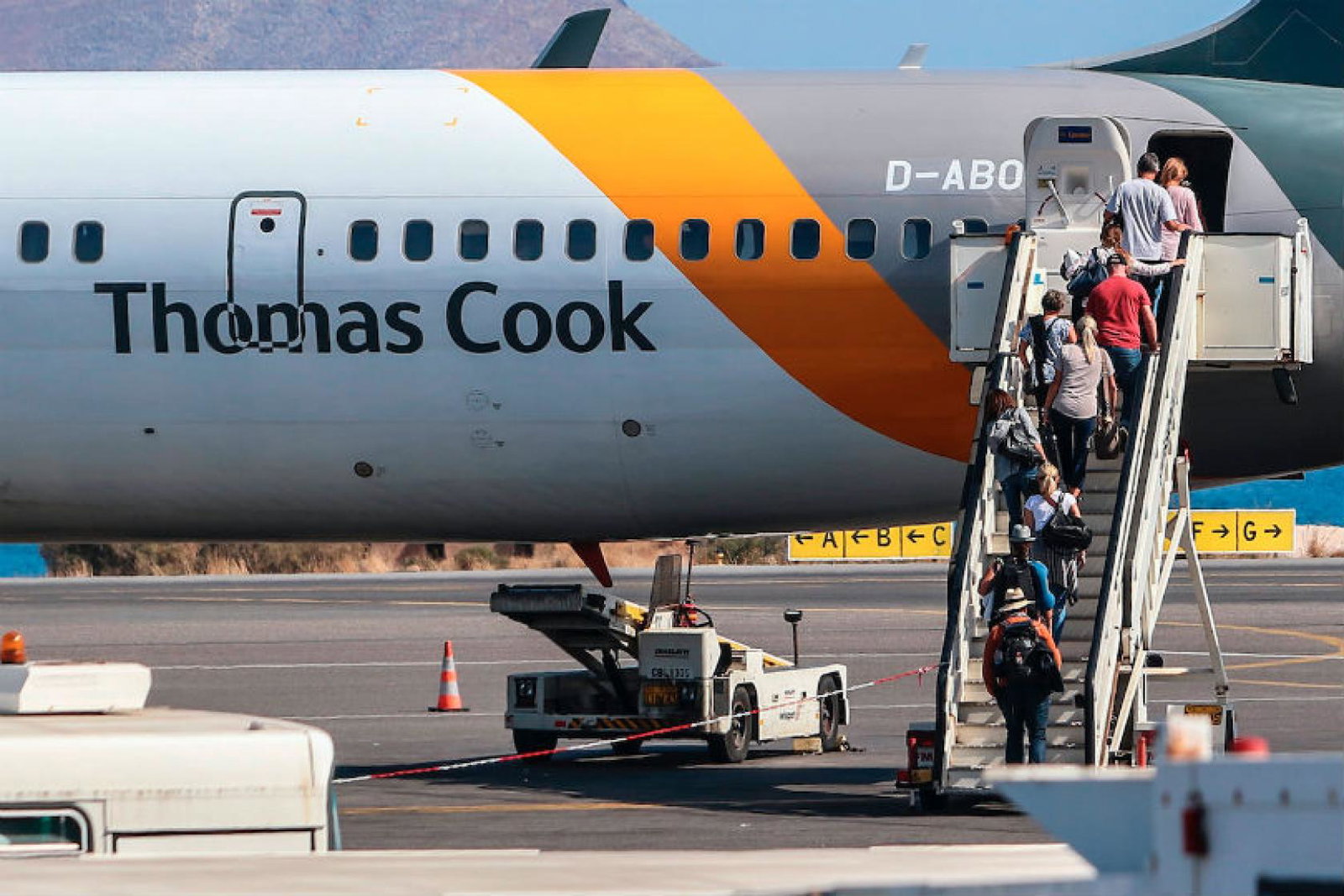
Now, according to recent reports it is about to be reborn, but who will book it and who will supply this new OTA with holidays to sell?
Last September, Fosun, a major shareholder in Thomas Cook, refused to invest a further £200 million to save it from failure. When the government took the same decision, the business collapsed. In fact, the Official Receivers’ office recent estimate is that Cook’s real level of debt was close to £9 billion, so £200 million wouldn’t have kept it afloat for more than a few weeks in any event.
Shortly afterwards, Fosun revealed plans to buy the Thomas Cook brand name for £11 million, and recently announced plans to relaunch Thomascook.com as an online agency. The creditors must have thought Christmas had come early.
For many the name has become toxic, and is hardly a brand to now instil confidence in potential consumers. The collapse of Cook was headline news in the UK for weeks afterwards. The government proudly declared the repatriation, organised so well by the CAA, the largest peacetime repatriation in history and even went so far as to invite television crews onboard some of the flights back to the UK – a first in CAA terms. The BBC and ITN also produced programmes dedicated to the collapse and the consequences for employees and holidaymakers.
Another 800,000 passengers who had advance bookings and are still awaiting their money from the CAA or Abta, are also well aware of the company’s failure. And are probably not keen to trust the name “Thomas Cook” again any time soon.
Overseas, 3,500 hoteliers lost their entire summer income in 2019, having not been paid from June onwards. They are also unlikely to do business with a brand bearing the name “Thomas Cook” again.
There’s also the issue of the other operators who rushed to plug the capacity gap left by Cook. As the company ceased trading, major operators like Jet2.com, easyjet and Tui went to work signing up the good properties for summer 2020 and arranging additional flights to replace those of Cook. Bookings are said to be good, so just where will Thomascook.com find its customers? And what will it have to sell?
Fosun have reportedly indicated they would like to apply for Abta membership and obtain an Atol. Indeed, it would be difficult after Brexit for them not to have a UK Atol – but is either proposal a realistic expectation? Traditionally Abta was always reluctant to see the name of a failed company reappear for at least several years, and considering claims can still be made up to 12 months after the failure, would they or the CAA really be happy to have the Thomas Cook brand resurrected in less than a year?
Thomas Cook may be a great name to use in Asia but here in the UK it seems a lot less certain. Life, after death, may be a lot harder than Fosun thought.
Alan Bowen was previously head of legal services at Abta and is now legal advisor to the Association of Atol Companies