“I don’t believe it!”
Those are the words of my brother, Kevin, having discovered the universal symbol of luxury sleep for the first time – turndown service.
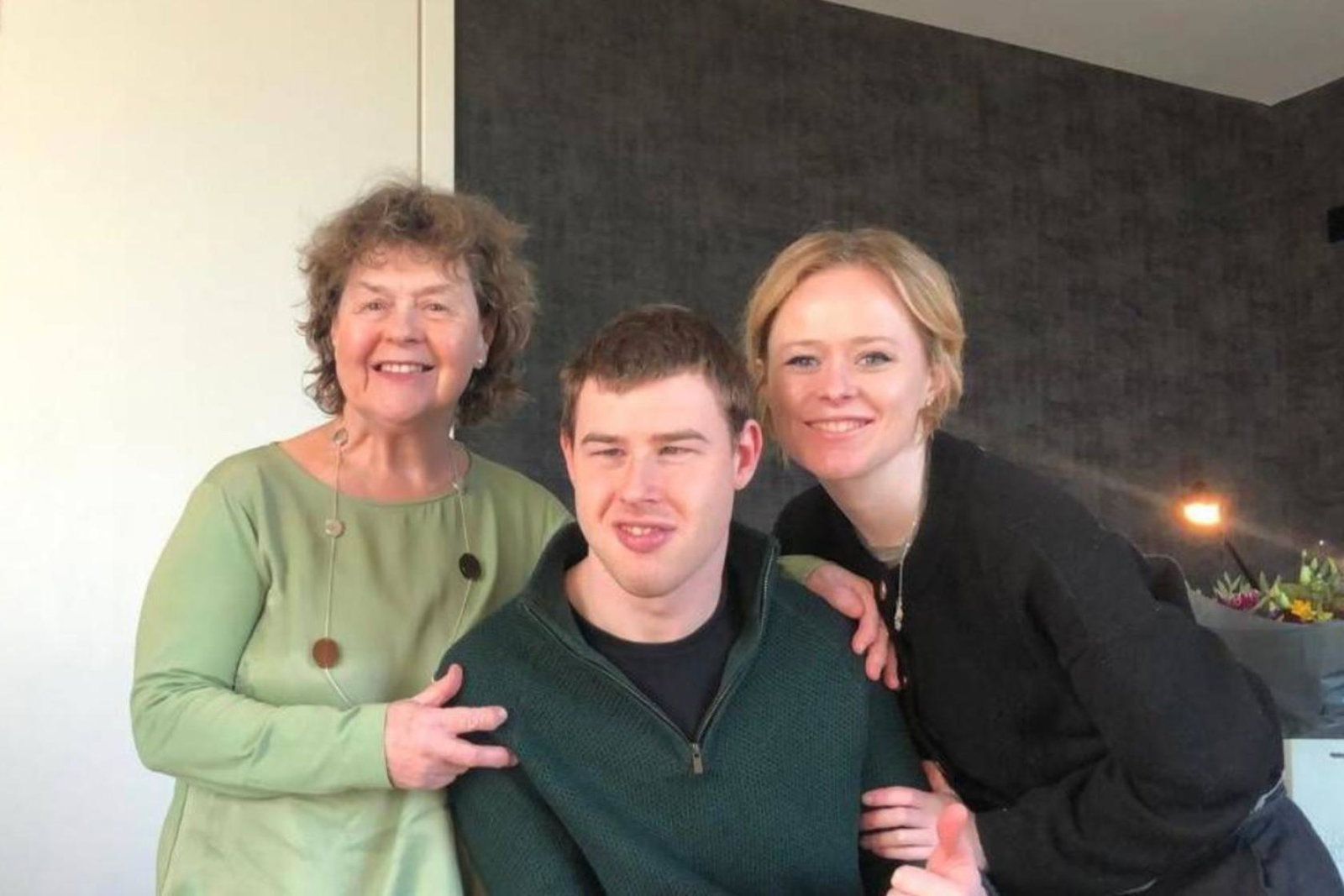
We have just returned from our meal at Anantara The Marker Dublin, where we are staying in celebration of his 25th birthday. He erupts into laughter as he wheels around the king-sized bed to inspect the scene: peeled-back sheets, plumped pillows and herbal tea. The free chocolate almost sends him over the edge.
He turns to me earnestly and cries, “We should do this at home!”
I cradle my head in my hands, realising I have just given him unrealistic bedtime expectations forever more.
I had wanted to review a five-star hotel with Kevin for a long time. Like many of us, he likes the finer things in life, and I’d often thought of how much he’d appreciate the luxury of my press trips. As consolation, I’d taken to video calling him whenever I checked in at a new hotel, flipping the phone around to give a tour of the property with my unfiltered commentary.
And while I loved seeing the delight on his face, I’d always hang up feeling guilty and wishing he could enjoy the grandeur beyond the screen.
But his cerebral palsy makes this difficult. Kevin is a wheelchair user, unable to walk comfortably for more than a few metres. He is also epileptic, visually impaired and intellectually disabled. These conditions carry a number of special requirements, which I had previously believed to be incompatible with the perfectionism of luxury hotels.
But then I thought of the travel agents I’d interviewed. They’d tell me all about their high-net-worth clients’ extreme requests, and the even more extreme lengths taken to fulfil them.
I had previously believed Kevin’s disability was incompatible with the perfectionism of luxury hotels
From 4am massages to monogrammed umbrellas, it seemed there was almost nothing a luxury agent and the hotel wouldn’t do to please their guests.
It was then that I thought, if a high-net-worth client can make such lofty demands, why shouldn’t a person with a disability be able to?
I was eager to test out this theory, and I knew exactly what hotel I wanted to do it in.
Located just 20 minutes’ from my family home, Anantara The Marker Dublin has been regarded as one of the city’s best luxury hotels since its acquisition by Minor Hotels in 2019.
The Bangkok-based company didn’t hold back with their takeover, ordering a major refurbishment of the property’s 187 rooms, lobby and hallways.
Since the reopening, the hotel has received glowing reviews online. Guests have praised everything from the geometric design to the panoramic rooftop views, with many others noting the improvement in service since its Anantara rebrand. The critics have also stamped their approval; it was nominated for Ireland’s Best Spa 2024 and its restaurant, Forbes Street by Gareth Mullins, won Hotel Restaurant of the Year by Good Food Ireland Awards 2024.
With so much hype, I was confident I’d enjoy my stay there.
But what I really wanted to know was, “Would my brother enjoy it with me?”
First Impressions
The hotel’s main entrance includes a revolving door, but right next to it is a DDA (Disability Discrimination Act) compliant door manned by the friendly porter. Inside the lobby, the floor is completely flat and there are no steps to access the multiple elevators, which are large enough to hold 17 people.
Natural light floods the reception, which meant Kevin was able to see his surroundings more clearly. Guests can also check in at a lower concierge desk, after helping themselves to a glass of complimentary iced tea (also displayed at hip-height.)
What wasn’t low-level, however, was the service. We were greeted by a team of friendly staff, including general manager Ludo de Jong, who went out of his way throughout our stay to make us feel welcome, and concierge manager Barry White, who quickly bonded with Kevin over their shared love of Manchester United. First impressions had us impressed.
Guest rooms
The next test, of course, would be the accommodation. Anantara The Marker Dublin has eight accessibility rooms, which, at 377 square feet each, are larger than both its deluxe and premium rooms.
The room was spacious enough for Kevin to roll his wheelchair around smoothly, and the king bed, with its padded headboard, ensured he didn’t hurt himself while stimming (repetitively bobbing). The mini bar was positioned at a low height for easier access, as was the security safe and the slipper armchair.
The bathroom also had a number of accessibility features, including multiple grab bars and a shower seat. Designed like a wet room, there was no threshold blocking the rainforest shower, which minimised the risk of tripping. The height of the shower seat, however, currently can not be adjusted.
We were also booked into the Schwartz Suite, which was connected to our accessible room by a door.
Also called a Junior Corner Suite, this 990 sqft apartment included a bedroom with a separate living room, a master bathroom and a guest bathroom. The designer sofa in its lounge was low, which allowed Kevin to sit more comfortably on it, and the round dining table was perfect for tucking his wheelchair beneath.
A number of personal touches had been added to make both rooms extra special for Kevin, including a handwritten note from the general manager and tricolour shortbread.
The piece de resistance, however, was the arrival of a Manchester United cap on the final day. Gifted to Kevin by the head of marketing, Andy Kiernan, it was yet another testament to the team’s commitment to delivering VIP treatment for its guests.
The Docklands Storytelling Tour, one of Anantara The Marker Dublin’s signature experiences, was equally impressive. While tours can sometimes be difficult for Kevin, there was nothing challenging about this cultural activity.
Guest experience manager Derek Anthony Brennan adapted the route for Kevin, avoiding steps and seamlessly navigating him around historic Dublin. He also kept Kevin entertained throughout with appropriate stories and jokes, always considerate of his intellectual disability when explaining points of interest.
He even gave him a blanket to keep him warm throughout the tour, which was made all the more special by a stop at the former recording studio of U2. With Derek keeping watch for the police, I helped Kevin graffiti his name on the wall – a tradition that has become a must-do for all Bono fans visiting Dublin. Having made our mark, we fled the scene of the “crime" for a hot tipple back at the hotel.
Dining
Often, dining out with Kevin can be a headache. Restaurants can be too cramped for his wheelchair, too loud for his speech impairment, or too formal for his stimming. Fortunately, Forbes Street by Gareth Mullins is none of these things.
Headed by the award-winning Irish chef, this gourmet restaurant screams “wheelchair-friendly” from the moment of arrival.
In place of decor that could obstruct a wheelchair user, a geometric ceiling inspired by the Giant’s Causeway provides the focal point for all guests. The floor is completely flat, minimalistic and clear, leaving just the tables to manoeuvre around.
We were seated at a cushioned booth, the chairs of which were removed to make space for Kevin’s wheelchair. I had already informed guest services of Kevin’s limited motor skills, which restrict him from using a knife safely or holding cutlery in both hands.
They cut Kevin’s food into small pieces, saving myself and my mother the usual effort of some pre-meal surgery.
In turn, they cut his food into small pieces, saving myself and my mother the usual effort of some pre-meal surgery.
The waiter also happily honoured his request to order off the bar menu, which had more traditional dishes (such as fish and chips) to those on the a la carte. The special attention continued into dessert: softened ice cream for an easier spoonful, washed down by chocolate birthday cake.
Ambiance-wise, the restaurant ticked nearly all the boxes. There were no flashing lights or digital screens that could trigger Kevin’s epilepsy or distract him from his meal. The low background music allowed us to hear him speak clearly, and the wide distance between tables meant his voice wasn’t drowned out by neighbouring guests.
Spa
The Anantara Spa was another highlight. Hidden in the basement of the hotel, it is accessible via elevator and features a 23-metre infinity pool, Jacuzzi, sauna and steam room.
There are also five treatment rooms, where guests can book everything from a full body massage to an aroma facial, and a fitness centre equipped with Technogym machines.
While Kevin did not test the spa menu or gym facilities, he was eager to try out the swimming pool. After fixing his armbands and goggles, I wheeled him to the deck area and helped him out of his chair. Crucially, the floor was not slippery at all, which made it easier to hold him up before he entered the water. The pool had a depth of just 1.2 metres and a balmy temperature of 29℃, allowing Kevin to exercise more comfortably without getting too cold.
It’s important to note, however, that there are no steps or hoists to help guests enter the water. Fortunately, I was still able to slide Kevin into the pool with some effort, but it’s likely not accessible for people with more severe mobility issues.
The Jacuzzi, on the other hand, proved to be a far more seamless experience. With its Roman steps and bannister, Kevin was able to safely enter the tub as I held his free hand. There was also seating inside the tub, as well as adjustable jets, which allowed me to simmer the gushing whirlpool into a warm bath. Another perk was its size, which can hold between eight and 10 guests comfortably.
After relaxing in the Jacuzzi, Kevin was ready to test the eucalyptus-infused sauna and the steam room. He was able to access both thermal suites with my help, although neither were large enough to fit his wheelchair.
Final thoughts
Anantara The Marker Dublin is setting a new standard for luxury accessibility, not only in Ireland but on a global scale.
The property excelled across nearly every category, offering a spacious floorplan that enhances mobility and an elite team dedicated to meeting Kevin’s additional needs.
While the spa facilities are an area for potential improvement, the hotel embraced our feedback with openness and a genuine desire to enhance their accessibility. This humility reflects Anantara’s commitment to truly listening to its guests, and it’s an attitude that should be adopted by all competitor hotels.
My only complaint is that Kevin now thinks it’s normal to have homemade biscuits at bedtime – but after such an incredible experience, it’s a small price to pay.
Starting rate for accessibility rooms at Anantara The Marker Dublin is €290 and €1,890 for the Schwartz Suite.