Government review
Last March the government published the results of its triennial review into VisitBritain and VisitEngland. One of the conclusions was the recommendation that the two bodies be formally split in order to “drive improvements in the efficiency and effectiveness” of both.
Northern Ireland, Scotland and Wales all already have their own independent tourist boards.
VisitEngland’s then chief executive, James Berresford, was understandably delighted.
“This gives us the role we have always wanted,” he said at the time. “We will be leading strategic development across the industry to ensure England’s tourism offer is compelling.
“It takes us beyond marketing and involves us in helping shape the nature of the English offer.”
Less than a year later, however, the new Conservative government performed a spectacular U-turn. Last week it announced that instead of being pulled apart, the two bodies should be brought closer together – a move which looks set to spell trouble for the domestic sector.
VisitEngland has already found itself neutered. Berresford has quit and will not be directly replaced. Instead VisitBritain boss Sally Balcombe will be in charge of both organisations with a new director of England brought in to assist.
For some the alarm bells have already started to ring. “We don't think it’s in the best interest of English domestic tourism and not really in the interest of VisitBritain either,” insists Kurt Janson, director of the Tourism Alliance, which represents various different trade bodies across the UK.
“We don't think it’s in the best interest of English domestic tourism and not really in the interest of VisitBritain either,”
Kurt Janson
“What they are trying to do is align the activities in the England side with the Britain side.”
The Department for Culture, Media & Sport was not as badly hit in the chancellor’s November spending review as many had expected, and prior to his departure, Berresford helped secure an additional £40 million for VisitEngland. Which begs the question: why push for further integration of the two bodies?
Some have suggested the move was a pre-emptive strike, designed to mitigate George Osborne’s strongly anticipated cuts.
The DCMS itself has admitted the decision revolved around money, while also indicating where its new priorities lie.
“We remain committed to the principles of the triennial review recommendations, including the importance of ensuring there is clarity on the roles of the tourist boards,” a spokesperson said.
“But we have decided not to proceed with separation of the two bodies, because this would incur costs that we decided was money better spent on growing the visitor economy.”
The £40 million in extra funding will, according to VisitBritain, be used “to ensure that bookable regional product is being sold in international markets.”
However, this potential focus on building inbound numbers over the domestic market is understandably causing concern for many in the trade.
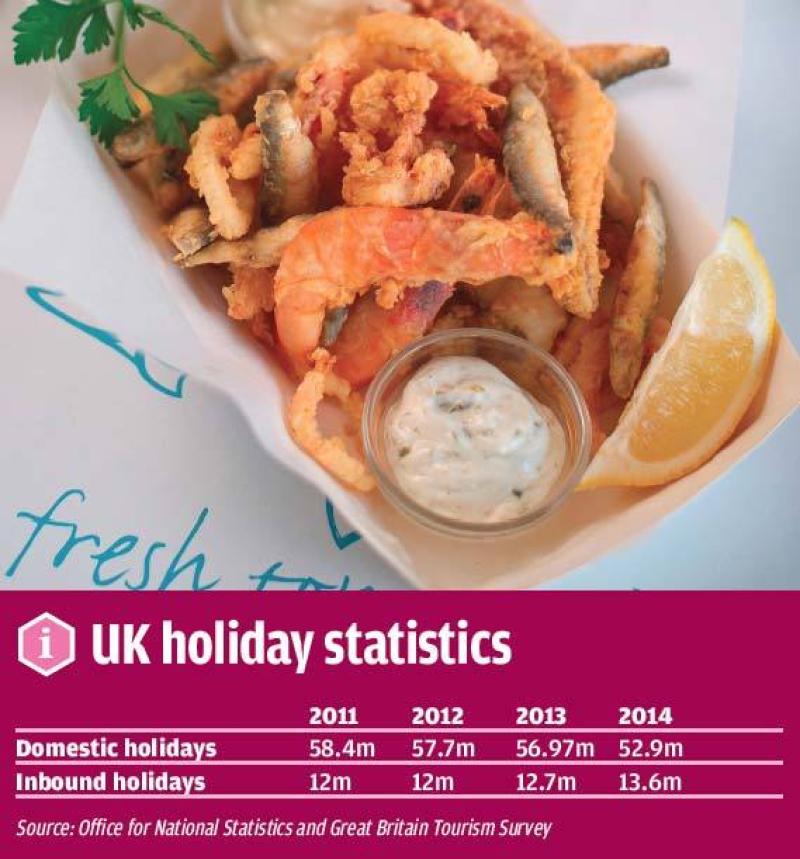
In 2014 there were just under 53 million domestic holidays, generating £13.1 billion for the UK economy. While impressive, the figures are part of a downward trend and with less of a focus, this is likely to fall still further.
“[The £40 million] was applied for by James Berresford at VisitEngland as a contestable fund for domestic tourism… the government decided that it would be better used for developing product that has been sold in the overseas market,” says the Tourism Alliance’s Janson.
Tour operators are also worried...
Geoff Cowley, managing director of Wyndham Vacation Rentals UK, says the company previously enjoyed a “strong and successful” relationship with VisitEngland “and would like this to continue under the new structure”.
He adds: “We would, however, be concerned if the new structure meant a focus on the inbound markets, with a disproportionate emphasis on London and regional hotspots, as this could be to the detriment of tourism business in rural and seaside locations, where domestic tourism is a driver of the local economy and job creation.”
During the past couple of years, VisitEngland has looked to boost domestic tourism with ad campaigns featuring characters from the Aardman Animations, such as Wallace and Gromit and Shaun the Sheep.
According to the British Tourist Authority’s annual report for 2014-15, the third “Holidays at Home are GREAT” campaign delivered £148.5 million in incremental visitor expenditure. The following year a further £4 million was spent on a similar campaign featuring Shaun the Sheep, which also involved travel agents and tour operators.
However, with the changes at VisitEngland, there is some concern that funding for specific domestic tourism projects could dry up.
Asked whether there would be a similar campaign this year, a spokesperson for the BTA said only: “We will continue to deliver the Holidays at Home are GREAT campaign domestically.”
There were no details, however, on how this would be implemented – and, crucially, how much would be invested in such a campaign.
Still an appetite?
If there is an obvious move away from potentially targeting UK holidays, it will leave many in the industry scratching their heads.
At Westoe Travel in South Shields, domestic breaks are 40% up so far year-on-year and director Graeme Brett believes there is still a big appetite out there.
“We’ve actually found that with money being a bit tighter, we’re seeing more people booking domestic holidays at the moment, and over the past three years it’s continued to grow.”
He also believes that with geo-political problems affecting popular hotspots such as Tunisia, Turkey and Egypt, people are increasingly either looking to stay at home – or go long-haul. “European bookings and short-haul bookings are very stagnant. Domestic is 40% [up] and so is our long-haul stuff,” he said.
“It's the in between – the short- haul stuff that's suffering.”
With the threat of terrorism and a looming financial crisis breeding further uncertainty, holidays at home are back on the agenda. But losing such a strong voice in James Berresford is likely to be a big blow for the trade.
It remains to be seen whether a rejigged VisitBritain can still have the same impact, while seemingly prioritising the inbound market.