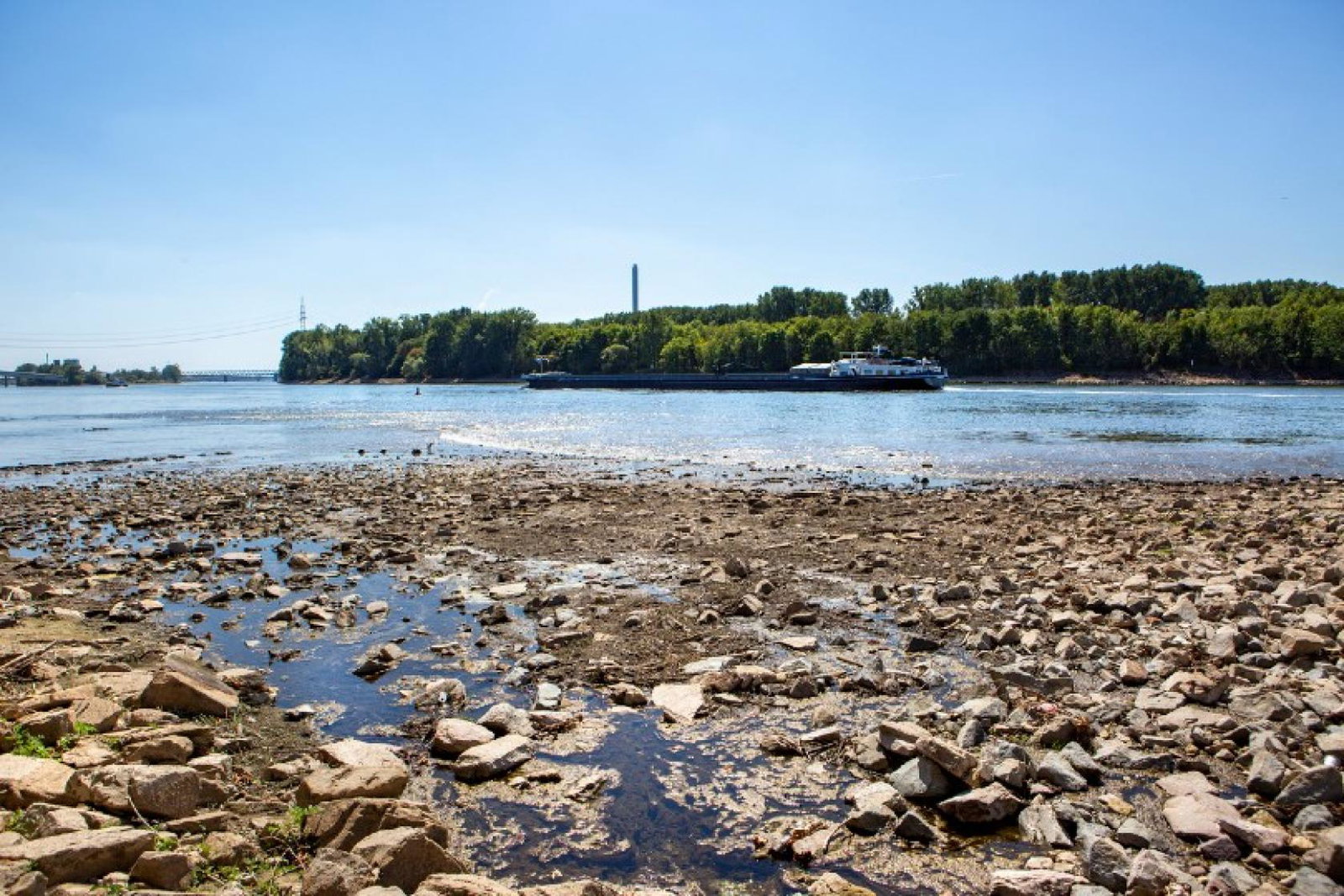
But one ramification that could alter the course of European travel is the increase in drought conditions affecting the continent’s waterways. Bleak images of a barren River Loire made the nationals last month as France suffered its worst drought on record. The water level sank so low in places it could be crossed on foot.
Elsewhere, the Rhine became "virtually impassable" at a key waypoint, while the Danube also faced low water levels. Germany’s Federal Waterways and Shipping Administration said west of Frankfurt, the Rhine’s depth was forecast to drop to 40cm with the water predicted to fall as low as 37cm.

The EU European Drought Observatory said 45% of the bloc was under drought warning by mid-July, with 15% on red alert. The European Commission has since warned of a "critical" situation in some regions.
Speaking to The Guardian, co-founder of New Water Culture Nuria Hernandez-Mora warned severe drought across the continent’s waterways "is going to be the new normal". "Yet we continue to approve increased use of a resource we don’t have, and which is becoming scarcer," she added. "Climate change studies warn droughts are going to be more intense, more frequent and longer."
Clare Dudley, managing director of Cambridge-based cruise specialist Ponders Travel, said while the droughts had not had an immediate impact on river cruise bookings, some customers had started to raise the issue. "We have had one trip that’s going to Oberammergau in Germany, which included a river cruise with Saga which they have adapted by a couple of days, but so far we haven’t had anyone affected by it," she said.
"But I suppose we are expecting it. I can’t pretend it isn’t a niggle at the back of my mind, but my way of dealing with things is to work with a situation once you know there is going to be a problem. It’s only been one or two customers who have raised concerns, and we managed to put their mind at ease by saying whatever happens you are protected with a full refund or an alternative itinerary."
Meanwhile, river cruise specialist and Go Cruise agent James Hill reiterated that opposed to freight barges – which require more clearance – river cruise vessels are flat-bottomed allowing them to travel even when water levels are low. He added levels can also change quickly with just a small amount of rain. Nonetheless, the situation is having an impact.
"Reports of the drought are stopping people making short- notice bookings for sailings in the next month," he told TTG. "Clients are also expressing worries about the rest of the season. Most companies have amended itineraries, and a minority have cancelled sailings. The smaller operators do not have enough ships to be flexible and continue sailing."
’Fluid situation’
Elsewhere, some river lines have so far gone unscathed in terms of cancelling or altering their itineraries, urging customers not to be put off of taking a river cruise.
Lucia Rowe, UK and Ireland managing director of A-Rosa River Cruises, said sailings would only be adapted "if necessary". "It is not uncommon for water levels to fluctuate during the seasons – river cruise lines are adept at dealing with these situations and reacting accordingly," she told TTG.
"When water levels become low, we monitor the situation on a daily basis, and [we] are in constant dialogue with the relevant port authorities and respective water management offices.
"This is such a fluid situation," she continued. "Each departure is different, and it has to be looked at on a daily basis when water levels are low. Our expert operations team have made tweaks on Rhine and Danube sailings as necessary, and even when adjustments are made, guests can be assured they can still enjoy our excellent service and relaxed atmosphere onboard."
Brad Bennetts, head of sales and business development for APT and Travelmarvel, said water level fluctuations were something that had long been part of the company’s and the wider river cruise industry’s contingency planning.
"Our team on the ground in Europe are adept at problem solving and have a raft of clever options to keep guests on their chosen itinerary should there be low water," he explained. "As such, we had all our necessary ducks in a row, and we’ve been able to manage things well this summer. We haven’t had to adapt very much; instead, it’s been a case of working at pace and managing more volume. The team has risen to the challenges very well."
Where low water did present challenges for the company, it overcame them by operating ship swaps – positioning two vessels in opposite directions and moving guests between them over land allowing them to continue their journey in an identical cabin.
Bennetts added the challenges posed by the weather this summer highlighted how it had never been more important for individuals and companies alike to push the sector towards total carbon neutrality.
’Staggering heat’
AmaWaterways managing director Jamie Loizou said all of the line’s river cruise vessels were still operating as planned. "We’re monitoring very closely the situation on certain sections of the Rhine and adapting our schedules as needed," he said.
"As water levels on the rivers can change quickly depending on local rainfall, we have a dedicated communications team in place to alert our guests and travel agents if there are major modifications affecting their upcoming river cruises and to assist with any changes that may be required."
Ellen Bettridge, president and chief executive of Uniworld, said that although the line had to cancel "a few" voyages, with others facing changes to their itineraries, impacted guests and travel partners had received updates and the opportunity to rebook onto another sailing.
"The nature of rivers is that they ebb and flow with the seasons," she said. "We have made adjustments as necessary with current low water levels caused by the staggering summer heat."