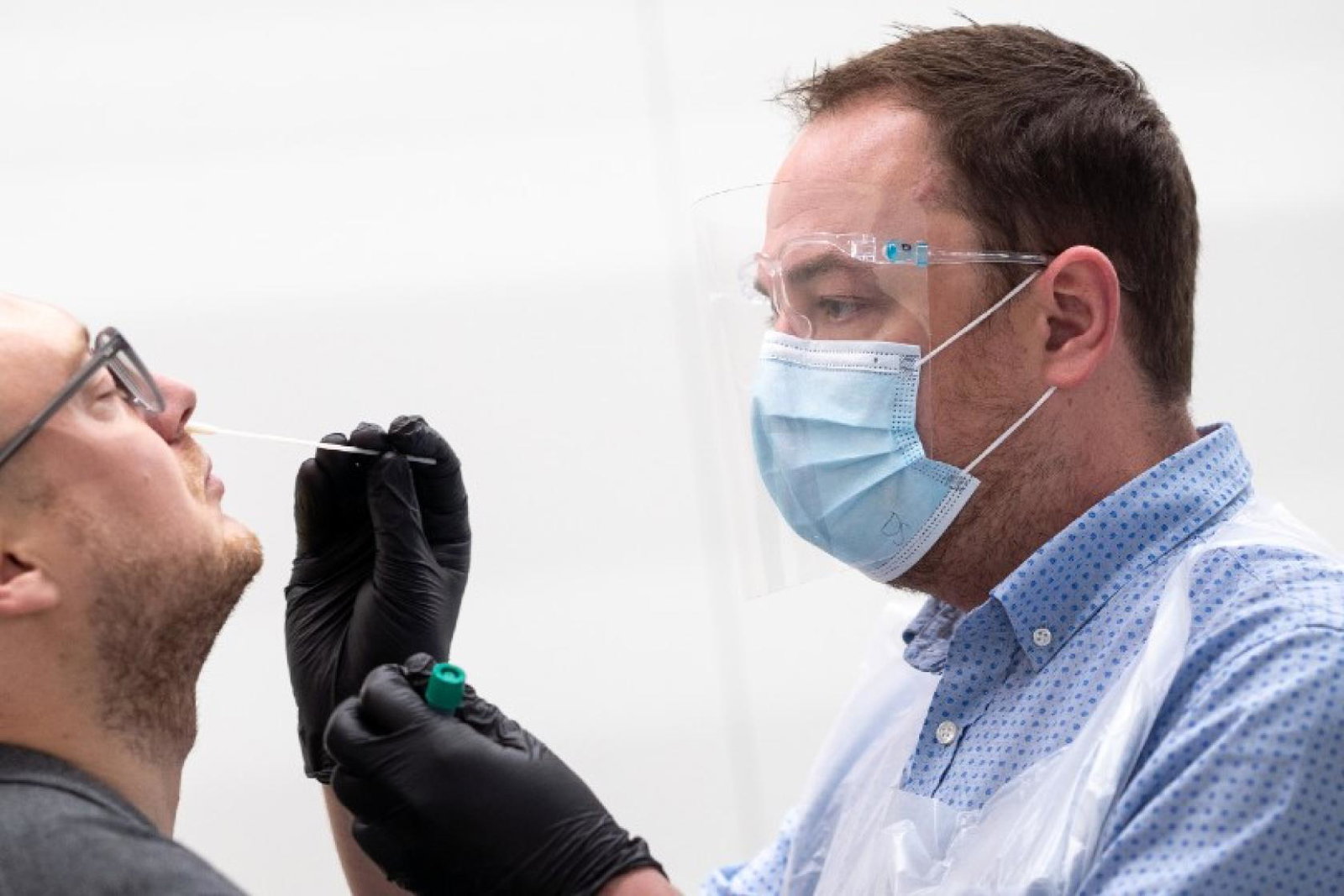
Specialist firm Katalyst Laboratories is setting up testing facilities at several airports ahead of the restart of international travel, which is not due to restart until 17 May at the earliest.
Sales director Angus Urquhart told the Travel Technology Initiative (TTI)’s spring conference that the aim of its work with airports and airlines was to create a “reassuring environment” before people travel.
“You can set up a mobile testing hub in the terminal or car park,” he explained. “There are lots of different methods of doing this.”

Urquhart said rapid PCR tests, with results available within 60 minutes, were “coming to the fore” and could play a part in testing people before they board flights.
Some airlines, such as Dutch carrier KLM, were looking at a regime where passengers will get a PCR test within 72 hours of travelling and then take a “lateral flow” or antigen test at the airport “as a second check” before getting on their flight.
Urquhart added that the current cost of PCR tests was too high – often more than £200 to get results within three or four days.
“Reducing the cost of testing is very important,” he stressed. “The big risk factor is bringing new variants back.”
Urquhart said that reducing queues in the airports could be achieved by keeping people outside the terminal or staggering their arrival times at the airport.
He added that “pool testing” could also help speed up the process by testing several swabs at the same time and all passengers in the pool being cleared to fly if the result comes back negative. If it is positive, then all passengers in that pool would be tested individually.
Tom Jenkins, director of European Tourism Association (Etoa), added that governments around the world, particularly the US, feared letting in a new Covid variant if they opened their borders.
“It’s stalking their decision-making and it’s difficult to get them to commit to opening up,” he said. “We’re losing June arrivals as we speak and if they carry on dithering we will lose July as well.”
Jenkins said the inbound European market was “inevitably drifting towards a lates market”, which could benefit operators who can put together attractive packages for key markets such as the US.