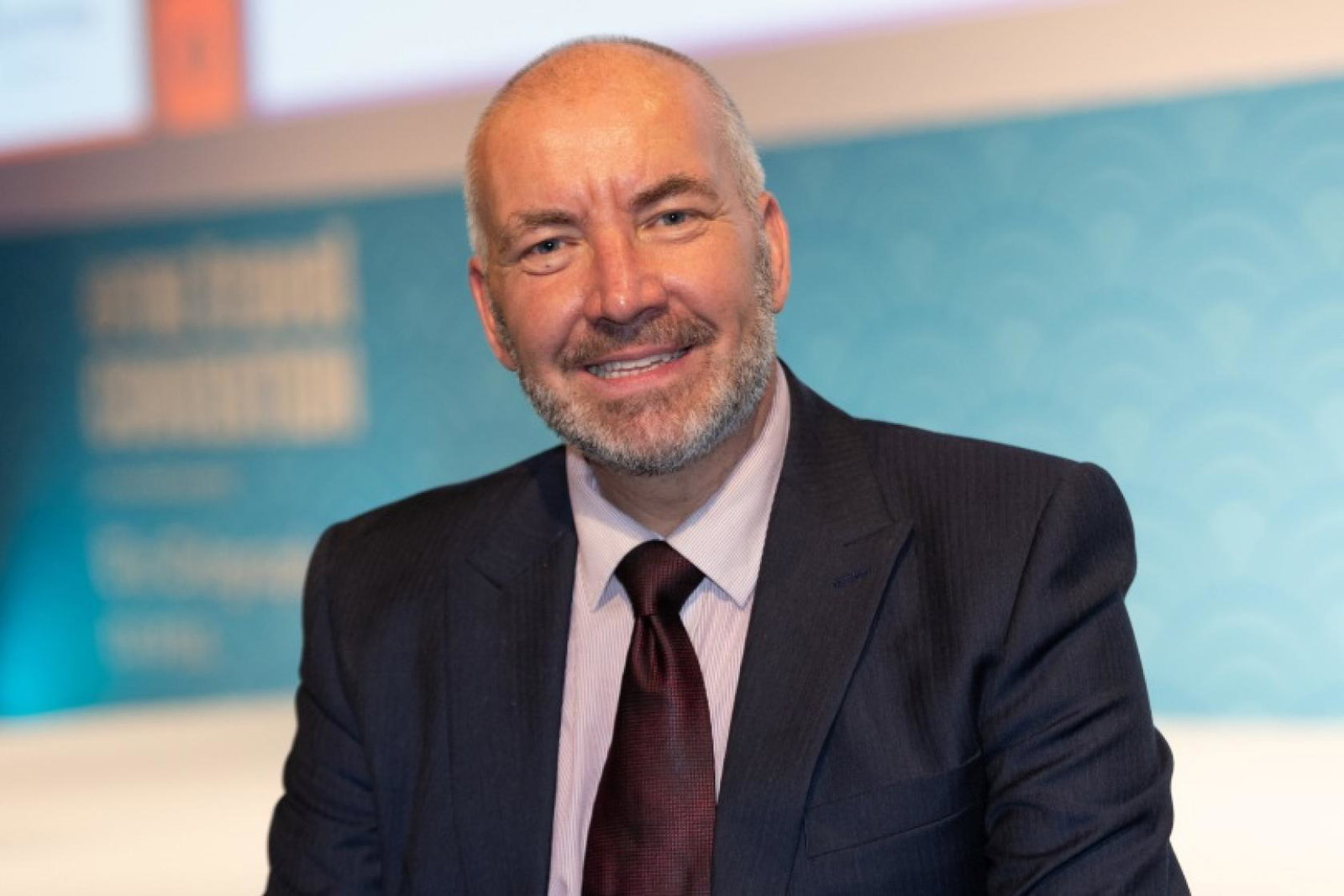
Add to this a whole travel division, as well as the role of Abta chair – not to mention having taken on 200 former Freedom agents in recent months – and it’s fair to say Midcounties Co-operative’s specialist business retail chief Alistair Rowland has had his hands full of late.
Speaking to TTG last week, Rowland was crystal clear on what needs to happen for the travel industry to weather the extreme pressure it is currently under, and what his company is doing to support its own employees and members.
On top of its own 58 high street travel agencies, Midcounties also comprises the Co-op Travel Consortium, which has 170 members, and The Personal Travel Agents at Co-operative Travel, a network of 170 independent, homeworking travel agents (PTAs).
Midcounties memorably acquired the vast majority of Freedom’s consortium agents after Thomas Cook collapsed last September – businesses that, having just picked themselves back up after that crisis, now find themselves in the grip of another.
Many of the homeworkers in Freedom joined Midcounties consortium members too.
Thankfully, the measures for self-employed people announced by chancellor Rishi Sunak in recent days (centred around the Self-Employed Income Support Scheme, which will pay a grant of 80% of average monthly profits over the past three years, up to £2,500 per month) will help a large proportion of self-employed travel professionals.
But there are some who will fall through the gaps, and for those who do qualify there’s the fact the money won’t arrive until “early June”.
“The government announcement helps most of our agents to an extent, but there are some who will have hundreds of thousand of pounds worth of sales [and commission] for April and May, with Easter and summer coming up, and aren’t booking anything new,” said Rowland.
“On top of that, they’re being asked for refunds. They are starting to become net minus [in terms of overall commissions yet to be paid out], while also not creating new income for the future.”
On the government relief available, Rowland added: “While the new measures are helpful to 80% of our agents, which is brilliant, they miss two main sets of people – those who are new to homeworking and have not filed a tax return, and those at the top end of homeworking who operate as a limited company.”
On the whole, the scheme is designed to help sole traders who submit a tax return via self-assessment.
Limitations include a hard cut-off for those whose average trading profit over three years exceeds £50,000, and it won’t help those who have recently become self-employed: the scheme will only consider the 2018/19 tax year and the two before it.
And while employees can be furloughed, there is no additional relief available for many directors who run a limited company – and if they chose to furlough themselves, they couldn’t support their customers.
Thankfully, even though ex-Freedom PTAs will have only recently moved to Midcounties (joining a consortium member of Midcounties), provided they filed a tax return for the period stated, then they should be able to claim. And many of the agents who joined from Freedom were granted instant commission, so will have only lost one month’s worth of income on the Thomas Cook failure.
But for those PTAs who lost all their commission when Thomas Cook collapsed, and who do not qualify for the government relief, Rowland agrees they will be “really struggling”, along with those who are new to homeworking and do not have “bookings in the tank [to claim commission on]”.
Internal relief
Midcounties is offering a number of solutions to its PTAs, including holding back refund payments and monthly fees. There is also an existing scheme in place whereby PTAs can borrow against commissions they have not yet been paid that are “likely” to come through.
“We’ve got to do all we can to keep these agents solvent, even if it involves an element of risk,” said Rowland.
He added, though, he wants clarity from government on the longevity of its advice against all but essential travel, so that agents and consortia alike can start operating within a new time frame.
“We’re all expecting an extension to the travel advice – I think for another six weeks – and we need to find that out as soon as possible so we can start booking and preparing for that pent-up demand.”
For its consortium members, who should be able to access the government relief available for small businesses, Midcounties is also offering to defer refunds and fees.
“Everyone needs different help,” said Rowland. “But they are all hurting now, particularly with the way airlines and tour operators are handling refunds.”
The refund debate
“What’s difficult is that no one [operators and airlines] is refunding anything,” said Rowland. “They’re offering credit notes instead and that is outside of any regulation. Customers are getting more frustrated by the day.
“Until we get some clarity from the government on this issue – which I do think is coming imminently – then the airlines will continue withholding refunds and creating this block. Once they start releasing cash, the whole process can start to flow again.
“Airlines are clearly worried about cash flow and are harvesting cash. So I think they’re waiting for an announcement from government on refunds before they release the money. They want that assurance.”
Rowland added he was sitting on tens of thousands of files [bookings] he’s unable to reverse at the moment, the number of which are “just getting bigger and bigger”.
He said he was hopeful of a UK government update to the Package Travel Regulations in the coming days – to permit firms to offer credit notes in lieu of an immediate refund to prevent failures – as the EU has already taken that decision.
“It’s essential we get to a position where everyone is doing the same thing so we can get used to a new normal,” said Rowland. “Abta is trying to create a situation that’s good for everyone,” he added.
‘On the hook’
“What the government needs to realise is they’re on the hook if travel businesses go bust as customers will refer to the Atol scheme,” explained Rowland.
“They would be far better off making suggestions to allow more time to process refunds. Potential failures will cost more to them in the end.
“The situation truly demonstrates the need for a dedicated UK tourism minister concentrating on the outbound sector, who can go to the front of the queue with the prime minister and get cut through on the tourism industry’s needs. So many different departments have got a foot in [travel] and it’s inefficient. Let’s hope travel businesses don’t collapse en masse as a result of this inefficiency.”