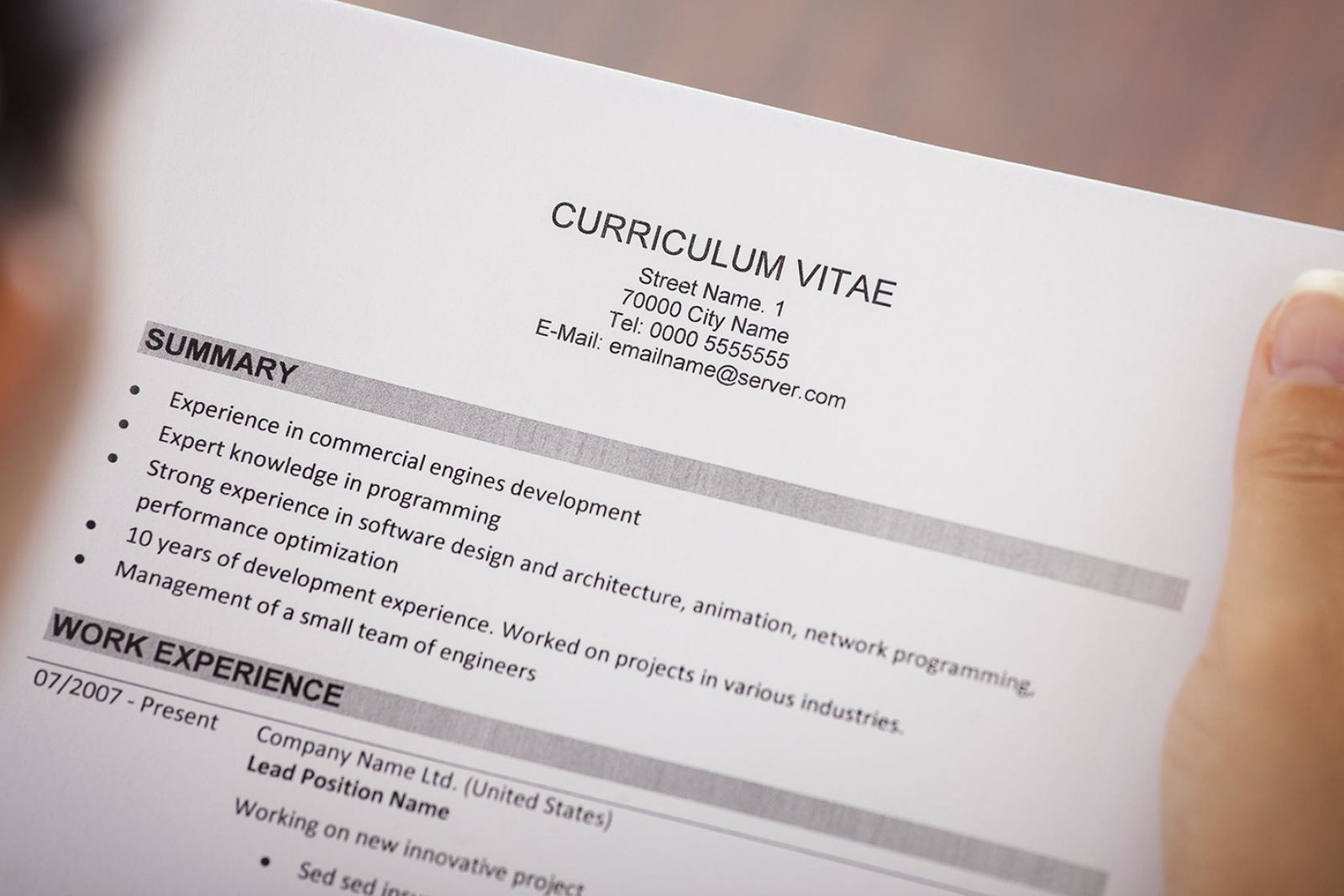
Whether you are looking for a new job and want to stand out, or simply want to make an overdue update to your CV, there are some golden rules to follow. Here are my top tips on how to highlight your key assets and write a brilliant CV, which gives you the best chance of getting through the door for an interview.
1. Keep it simple
A CV is a professional document. Don’t try too hard to make it stand out by using an eccentric font, unnecessary information or bright colours.
2. Ensure there is a clear structure
Employers will rarely have time to read every single word in a CV. Label each section clearly so that people can find what they’re looking for. Paragraphs, clear titles and bullet points are a good idea. Set out your CV in chronological order and start with your most recent role first, giving start and end dates for your roles, such as November 2013 to November 2014. If you have had a career break, include this - don’t leave missing gaps.
3. Put a spotlight on your experience
Experience and career achievements are key when trying to make your CV stand out among the crowd. Don’t just give a list of your daily tasks; give an overview of your responsibilities and role and then highlight your key achievements. Show how you have added value by giving tangible evidence and outcomes based examples. For example, “instrumental in implementing a new customer service portal, which has increased sales by 10%”. If you have managed a team (even just one person) or been responsible for a budget, include these details as it shows your levels of experience. If you don’t have any professional experience, an employer will look for placements and student jobs, which show initiative and determination.
4. Tailor your CV to the role
You shouldn’t use the same CV for every single job application. It is in your best interest to adapt it according to the job you are targeting. Some experience or training might be more relevant for one job than for another. Review and edit your CV with the job in mind, ask yourself what is the employer looking for, how can I add value to their organisation and how will I demonstrate it?
5. Spell check
It is possibly the simplest element of writing a CV, which many people still neglect - making sure there are no spelling errors or blatant grammatical mistakes. Run a spell check on your CV, or ask someone to read it for you.
6. Mention relevant training
As well as basic education and your specialisations relevant to the job, you may have completed training certifications or industry specific qualifications. If they are relevant to the job in question, then include them. Continuous personal development shows a potential employer that you are committed and looking to improve yourself.
7. Show off how well rounded you are
Employers want to know that they are hiring a well-rounded individual. If you can speak more than one language or have worked abroad this is an advantage you should highlight.
8. Include a personal statement and a cover letter
Employers won’t always immediately see how your experience relates to their job. A short and succinct personal statement is a good chance to explain why you are the best person for the job and how you will add value. Do your due diligence about the organisation - show your understanding of who they are and the challenges to their sector. This should also be reflected in your cover letter. Ensure your cover letter is addressed to the correct person (and check the spelling of their name and their title - are they Mr or Mrs, or Dr?).
9. Tell the truth
It is very tempting to improve your CV by adding a few achievements or qualifications, which you don’t actually have, but don’t bother. Lying on your CV is pointless as employers can easily check education history and employment references. There is also a good chance you will get caught out at the interview stage when you suddenly can’t answer questions on a topic you claimed to be an expert on.
10. Make it keyword friendly
In a digital world with countless online job sites, there is a good chance you might want to upload your CV so recruiters can find you. With this in mind, keywords are very important. Including specific job titles and keywords will help a search engine pick out your CV from the pile and alert employers to your job interest and area of expertise.