Aviation
The report, by lobbying firm WPI Economics on behalf of Heathrow, Gatwick, London City, Stansted and Manchester airports, urges the UK government to come to an agreement with the EU by October 2018 at the latest. As any aviation planner will tell you, October is when airlines hope to have their summer schedules for the following year worked out, so unless there is a deal on the table, Alicante – Benidorm’s gateway airport – and many others, could be bereft of UK passengers in 2019.
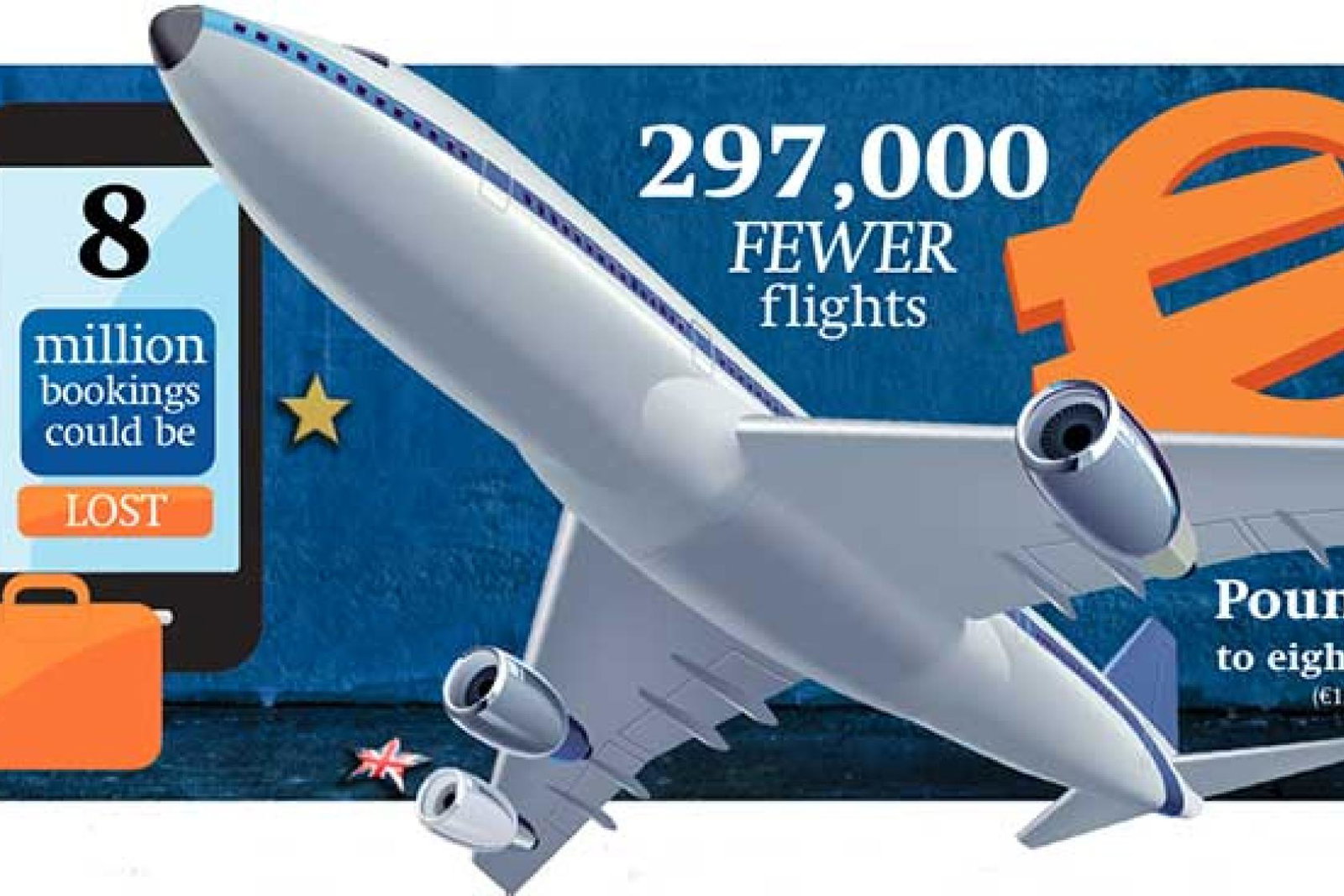
The report, Brexit and the Aviation Industry: The Opportunity for Certainty, predicts a near 21% decline in aircraft movements – equal to 297,000 flights – unless a deal is agreed, and will make alarming reading for ministers as they return from their own summer break.
Hopefully the WPI report is somewhat alarmist. Air links will be at the top of the list for discussion and should be one of the easiest things to agree; after all, will Spain want to see its biggest tourist market disappear because Britons cannot reach its shores? Moreover, will the likes of KLM – which alone flies to 17 UK airports – plus Lufthansa and Air France stand by and see one of their key markets disrupted?
Dale Keller, chief executive of The Board of Airline Representatives (Bar UK), is optimistic there is a will to agree on both sides of the North Sea. “I’m confident that the government here is saying all the right things about the importance of aviation and is prioritising it,” he said. “It seems incomprehensible that we would lose what we have now because it’s been a massive boost for consumers across Europe.”
Currently, the UK is part of the Single Aviation Market. Outside the EU, the UK can be part of the European Common Aviation Area (ECAA), which holds similar advantages and of which Iceland and Norway – two non-EU countries – are members.
Airline industry association Airlines UK, which represents a smaller group of carriers than Bar UK, is, like its counterpart, optimistic an agreement can be reached. Tim Alderslade, chief executive, believes: “This is a technical issue that needs to be resolved but there is no reason why this cannot happen fairly quickly once the discussions on aviation begin. We fully expect flights between the UK and Europe to be protected because the benefits to both consumers and companies across the UK and the rest of Europe are so significant.”
Abta, however, adds a note of caution: “Any deal that is reached, including any transitional arrangements, must also protect the UK’s air services with other countries beyond the EU, including the US,” said a spokesperson. This point is one that has fallen under the radar; namely that the EU has responsibility for negotiating our flying rights with countries outside the union on a “bulk buy” basis, so once Brexit is complete, the UK must fly solo when it comes to dealing with countries like the US.
ECAA membership may depend on some form of freedom of movement of EU citizens – a sticking point that may emerge as talks progress. “We’ve not seen the other side play its cards yet,” Keller admitted.
Equally, UK airlines and tour operators are keeping their cards close to their chest until they know what the government has in mind.
While Jet2.com, for example, declined to speak to TTG about Brexit, buried in its latest annual report is mention of “considerable uncertainty” around negotiations and the effect these could have, “both on our freedom to fly and on our customers’ ability to travel to our leisure destinations”.
Tour operators
One group that has been more vocal, particularly about free movement, is the European Tour Operators Association (Etoa). It surveyed more than 100 companies with offices in the UK and its findings give a glimpse of how difficult things might get. Etoa asked how companies would cope if they had to recruit all non-UK EU staff using a formal immigration process. The results will set alarm bells ringing in the industry, as 49% said they would see productivity “greatly reduced” and 29% “reduced”.
Companies were also asked if they had ever tried to employ non-EU citizens through the sponsored “Tier 2” visa system (the main UK Immigration route for skilled workers). Among these, 85% found the process “difficult to extremely difficult”.
Why does this matter to outbound tour operators? Simply because visa requirements can be two-way; so replacing freedom of movement with a Tier 2 visa system will affect any company recruiting UK staff to work as overseas reps or simply someone handing out fliers at a nightclub.
Tom Jenkins, Etoa chief executive, is alarmed. He said: “Tour operators carrying UK clients need the freedom to employ UK nationals as tour managers and local representatives in continental European destinations. Thousands of UK nationals work across Europe in all sorts of roles: the reciprocity of freedom of movement is coveted and needs to be retained in any Brexit deal.”
The situation is so alarming that 20% of Etoa’s membership is thinking of relocating their head office to an EU country. One said: "The potential impact is quite frightening – currently a huge percentage of our team are working in Europe via UK passports, which may potentially no longer be an option.” Abta is on the case though, and along with the ITT and Aito, is surveying members to gather evidence to pass to the government.
All this has to be sorted by March 2019, when the UK quits the EU, but many believe this deadline is a tall order. Tui boss Fritz Joussen, looking at it from a mainland Europe perspective, has predicted that negotiating Brexit will take up to a decade, rather than the two years the government had set as a deadline.
Meanwhile, the uncertainty has provoked a more immediate concern for the outbound industry. Last week, the pound hit an eight-year low against the euro, due in part to concerns about how long it will take to negotiate Brexit.
At around €1.08 to the pound, selling holidays in the eurozone will be that little bit harder – as if we need reminding, when the euro became common currency in 2002, £1 bought you €1.59.
Hopefully, for politicians holidaying in Europe this summer, the crashing exchange rate will have been a painful reminder of how urgent the Brexit situation is becoming. It’s time for them to get back to work and sort it out.