An ambition first flagged by the industry a year ago received government backing last autumn in the shape of the Jet Zero Council – a new body which gathered industry leaders and ministers together to, as it put it,“turbocharge” sustainable aviation projects.
A key proposal – developing an emission-free transatlantic aircraft – drew much scepticism, but Jet Zero’s other main development focus, Sustainable Aviation Fuel (SAF) is already emerging as a credible interim measure while alternatives like electric propulsion are developed.
Fifteen years before Jet Zero was set up, industry body Sustainable Aviation, which counts most UK airlines and aviation-related businesses among its membership, began work on the issue.
It neatly sums up the problem faced: “At present, the performance of battery technology cannot match the performance of liquid hydrocarbon fuels, which means that in the short- and medium- term for short-haul flights – and in the long-term for long-haul flights – flying will remain jet-fuel based.”
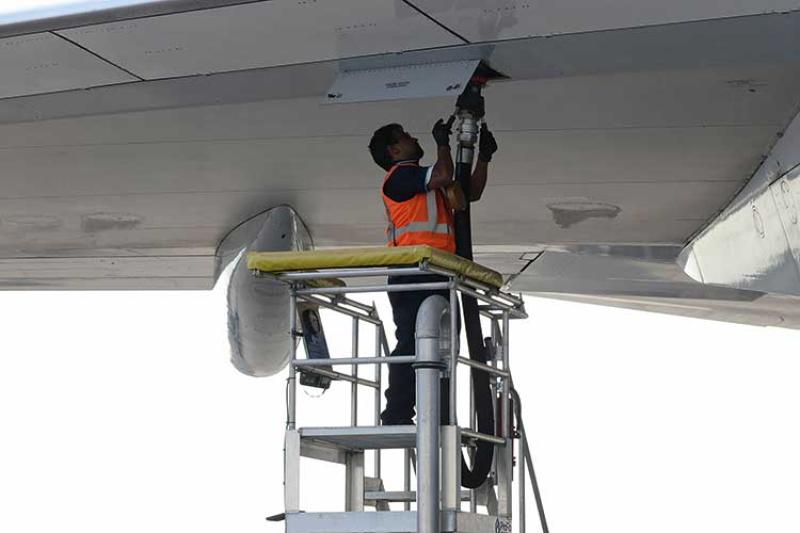
Until science provides an alternative, sustainable fuels are the “bridge” to other forms of power. None can currently be blended more than 50% with regular kerosene, but they offer a 70-80% emissions reduction compared to fossil jet fuel.
Professor Iain Gray, Cranfield University’s director of aerospace, agrees SAF provides an interim solution as part of the fuel mix.
“We will see 100% SAF options in the near term constrained only by fuel production quantities and cost,” he says, although supporters point out 100% SAF will require modifications to aircraft fuel systems.
“Achieving net zero emissions will require airports, air traffic providers, airlines and aircraft manufacturers all working together – collaboration is key,” Gray says.
Pollution solutions
Pre-Covid, UK aviation produced 38 million tonnes of CO2 annually, estimated to rise to 70 million by 2050. However, Sustainable Aviation believes Net Zero emissions can be reached via a variety of initiatives by 2050 despite the pre-Covid estimate of a 70% growth in passenger numbers.
Among these initiatives are fleet upgrades that use less fuel, which Sustainable Aviation believes will cut emissions by 23.5 million tonnes. This is credible, it says, because “between 2010 and 2016, passenger numbers in the UK grew by 27%, while total emissions only grew by around 0.2%”.
Sustainable Aviation predicts another 26 million tonne reduction will come from Market Based Measures (MBMs) such as global emissions trading and reductions in other sectors where removal is more easily achieved.
Put simply, there is little that can immediately be done about aviation emissions, so the policy is to offset them by helping other industries to reduce or eliminate pollution. However, Professor Gray says there is “a real commitment” from aviation to not rely on offsets.
SAF is predicted to result in a 14.4 million tonne reduction by 2050, so it is part of the solution, not the full panacea.
“We said that by 2050, a third of (UK) aviation fuel demand can be met from SAF, the rest will have to be offset,” says Sustainable Aviation programme director Andy Jefferson.
Sustainable Aviation believes there could be between five and 14 SAF plants in UK locations producing new fuels by 2035. Production will need to be ramped up, because SAF is, Jefferson says, currently “at least five times more expensive” than conventional kerosene.
Waste watching
Nevertheless, there is eagerness among major airlines to adopt SAF, and the mistakes of earlier trials have been realised.
In January, the EU’s Fuelling Flight Project published guidelines on using agricultural and forestry residue and household waste, which would otherwise be destined for landfill, as initial fuel sources, rather than dedicated SAF cropland.
The EU predicts initial SAF production will come from waste oils already used to make diesel, but adds that if this were diverted to aviation fuel, it would only displace “around 2% of 2030 EU jet fuel demand”.
Sustainable Aviation’s belief is that initial significant sources will come from agricultural, forest and household waste. British Airways is already going down this route, planning the UK’s first commercial waste-to-fuel plant in Lincolnshire with sustainable technology company Velocys.
BA has also invested in LanzaJet, which is building a plant in Georgia, US, to produce ethanol from mainly agricultural residues and “recycled pollution”. Ethanol, which reduces the carbon intensity of fossil fuels, is then blended with conventional jet fuel. The BA deal involves “early-stage planning” for a UK plant.
BA’s agreement with LanzaJet follows Virgin Atlantic, which has had a partnership with its parent company LanzaTech since 2011. In 2018 its fuel blend powered a flight from Gatwick to Orlando, with TTG joining the return leg.
However, Harold Goodwin, director of the Responsible Tourism Partnership, is sceptical of this approach.
“There are basically three kinds of SAF; it suits the airlines wanting to pursue business as usual to lump them together,” he says.
SAF from waste, he argues, emits greenhouse gases, while biofuels “prioritise fuel over food and protein”.
Goodwin is, however, an exponent of the third option, synthetic fuels derived from hydrogen and captured carbon. This process uses water and renewable electricity, such as wind power, to refine hydrocarbons into liquid fuel.
Taking the initiative
Sustainable Aviation’s Jefferson believes this is the future. “From 2035 we would like to migrate to synthetic SAFs with renewable energy from windfarms, captured carbon and green energy,” he says.
SAF produced in this way could even be emissions-negative, he believes, making it a major advance on fuels produced from waste.
Sustainable Aviation believes the government needs to focus on such projects. “If we don’t get cracking, it will happen elsewhere and we’ll end up having to import what somebody else produces,” says Jefferson.
Indeed, the Netherlands is already working on Zenid, a demonstration synthetic fuel plant backed by Royal Schiphol Group, due to open in 2024. Separately, at the start of February, a KLM flight to Madrid took off with 500 litres of synthetic kerosene in its tanks made by Shell from water, CO2 and renewable energy.
Given these advances, perhaps Boris Johnson’s ambition to build a carbon-neutral long-haul aircraft is not so fanciful – although Jet Zero’s original ambitions merely say a large climate neutral aircraft “is possible” by 2035.
Jefferson suggests a carbon neutral transatlantic flight is feasible but adds this would entail blended fuels and offsets rather than electric or other new engine technology.
However, he says a 150-seat short-haul hydrogen-propelled emission-free aircraft is possible “within 10 years”.
The next decade will hopefully see these developments. The pandemic does not seem to have impeded progress and maybe Covid has made people appreciate cleaner air and the natural environment more. Given this awareness, progress may be driven by public opinion and groups like Extinction Rebellion – Gray is convinced consumers wish to appease their guilt about flying.
“Remember the emerging voice of the passenger pre-Covid – the voice of the passenger will be key,” he says.